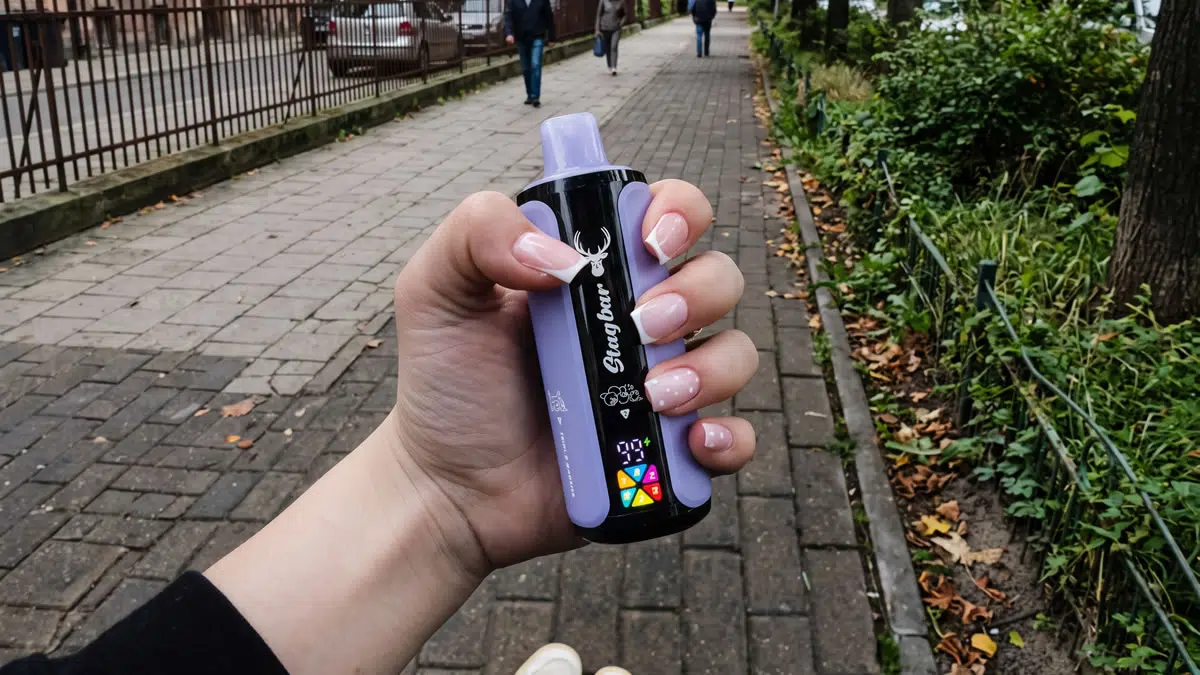
Poland’s vaping sector operates as a dual market. Alongside a licensed brick-and-mortar network bound by European Union Tobacco Products Directive (TPD) standards and steep excise duties runs an extensive parallel shadow market. Driven by online sales prohibitions and price differentials, this informal network supplies untaxed, high-capacity products through private messaging channels and automated parcel lockers.
- Dual-Track Sourcing: Licensed shops buy through domestic wholesalers with six-month chemical notifications, while shadow operators source via cross-border parcel freight and air cargo.
- Retail vs. Digital Fulfillment: Legal sales are restricted entirely to physical storefronts; parallel networks distribute remotely through encrypted apps and automated lockers.
- Fiscal Disparity: Formal products carry physical tax stamps (banderole) and heavy excise duties, whereas irregular goods circulate untaxed to offer lower consumer prices.
- Product Divides: The regulated sector is limited to 2 mL pods and 20 mg/mL nicotine caps, while parallel channels circulate devices delivering 5,000 to 20,000+ puffs.
Poland’s vapor sector functions as two parallel operational ecosystems. On one side sits the formal retail infrastructure, tightly governed by the Ministry of Health, statutory chemical notifications, and heavy excise duties. On the other side sits a shadow distribution network, estimated by trade groups to capture between 50% and 60% of total consumption volume.
This bifurcation is not accidental. Strict state policies – including a total ban on distance e-commerce, advertising bans, and rising excise rates – have created two separate operational pipelines that supply Polish consumers through distinct supply routes, pricing models, and logistical channels.
1. Market Bifurcation: The Drivers Behind Two Parallel Channels
To understand how vapes move through Poland, one must examine why two distinct routes exist simultaneously. The statutory framework treats vapor devices not as ordinary consumer electronics, but as restricted tobacco-adjacent commodities subject to fiscal control.
The formal market serves consumers seeking compliance, product predictability, and straightforward physical access. Retailers in this space operate under standard corporate registrations, absorb high upfront tax obligations, and restrict their catalogs to strictly metered capacities.
Meanwhile, the parallel shadow market has grown in direct response to regulatory boundaries. When Poland banned consumer-facing online vape sales and imposed flat-rate excise duties on devices and liquids, consumer demand shifted toward underground channels. This informal network supplies products that the regulated market cannot legally offer, such as large-capacity disposables and unconstrained bottle sizes, delivered directly to neighborhood collection points.
2. Track A: The Regulated Commercial Pipeline
The regulated market is structured around transparency, physical verification, and upfront duty settlement. Every participant must follow defined administrative steps to maintain legal standing.
Commercial Structure and Sourcing Channels
Legal retail businesses source inventory through two established supply routes:
- Authorized Domestic Wholesalers: Most physical vape shops purchase inventory from large Polish distributors such as CK Complex, E-Dym, and Polska Grupa Tytoniowa (Polish Tobacco Group). These distributors act as primary market gatekeepers. They handle customs clearance, settle excise fees, affix fiscal tax stamps, and verify registration status.
- Direct Corporate Importation: Larger retail chains import hardware directly from manufacturing centers in Shenzhen, China, or liquids from European blenders. Under this model, the retailer acts as the legal importer, absorbing direct responsibility for customs reporting, tax warehousing, and laboratory testing.
Statutory Compliance and Product Limits
To enter the formal supply chain, products must satisfy the European Union Tobacco Products Directive (TPD) framework implemented under Polish law:
- Notification Protocol: Manufacturers or importers must register every unique product variant through the EU Common Entry Gate (EU-CEG) and file documentation with the Bureau for Chemical Substances (Biuro do spraw Substancji Chemicznych) at least six months before commercial release.
- Capacity and Strength Limits: Nicotine e-liquids cannot exceed a concentration of 20 mg/mL. Refill containers cannot hold more than 10 mL, while integrated tanks and pre-filled pods cannot exceed 2 mL.
- Packaging Standards: Packaging must incorporate child-resistant closures, tactile warning triangles, and mandatory Polish-language health warnings regarding nicotine addiction.
Retail Distribution and Fiscal Obligations
Formal commercialization is restricted to face-to-face consumer transactions:
- Physical-Only Footprint: Retailers operate through dedicated specialty vape stores, kiosks, newsagents, and convenience chains like Żabka. Remote ordering, digital checkouts, and courier delivery to retail buyers are prohibited.
- Fiscal Registration: Entities trading in vapor products register with the Central Register of Excise Entities (CRPA) via the Ministry of Finance portal (PUESC). Sales must be processed through certified fiscal cash registers (kasa fiskalna).
- Excise Stamp Application: Every retail package must display a physical excise tax band (banderola) applied directly over the carton opening prior to public display.
- Age Controls: Staff must demand government-issued photo identification or verification via the national digital identity app (mDowód) to ensure the buyer is at least 18 years old.
3. Track B: The Parallel Shadow Distribution Network
Operating outside state oversight, the parallel channel has organized its own procurement, logistical hubs, and fulfillment methods to supply untaxed and high-capacity inventory.
Underground Sourcing and Cross-Border Pipelines
The shadow network relies on international arbitrage and commercial freight evasion to bypass local customs and fiscal controls:
- Air-Cargo Misdeclaration: High-capacity disposables (containing 10 mL to 30 mL of e-liquid) are flown from manufacturing plants in Asia into central European cargo gateways, including Amsterdam, Frankfurt, and Liege. Consignments are cleared under generic Harmonized System (HS) codes, such as plastic components, battery casings, or promotional gadgets, before being trucked across internal EU borders into Poland.
- Intra-EU Parcel Smuggling: Consignments are brought in from lower-tax EU jurisdictions via commercial freight vans. Because internal EU borders lack fixed customs checkpoints, wholesale parcels move into local holding sites without excise assessment or health notifications.
- Unregulated Liquid Blending: Domestic underground workshops produce unnotified e-liquids by mixing imported bulk nicotine, industrial propylene glycol, vegetable glycerin, and unregulated flavoring concentrates, bypassing product testing requirements.
Shadow Sales Channels and Fulfillment Mechanics
Because shadow operators cannot lease standard commercial real estate or run public websites without detection, they rely on decentralized digital tools:
- Encrypted Messaging Groups: Commercial menus are maintained on platforms like Telegram, WhatsApp, and Signal. Operators manage channels targeted at specific cities (e.g., “Vape Kraków”, “Vape Warszawa”), updating daily stock lists that display puff counts, flavors, and wholesale pricing.
- Veiled Classifieds: Sellers maintain temporary listings on online marketplaces and social apps (OLX, Vinted, TikTok, Instagram). These listings use coded terms, acronyms, or images of empty device boxes to bypass algorithmic filters, directing buyers to private chat rooms.
- Automated Parcel Locker Drops: Order delivery relies heavily on Poland’s automated parcel locker network (Paczkomaty). Packages are dispatched using prepaid labels purchased under burner credentials, allowing sellers to fulfill orders without identity verification or physical interaction with buyers.
- Cash-on-Delivery and Street Drops: For local buyers, transactions take place through cash handoffs in public areas or peer-to-peer campus distribution networks.

StagBar Vape 6in1 180K Puffs Disposable
The Stagbar 6-in-1 featuring a unique 6-flavor system and six independent mesh coils, this device allows users to switch between six distinct tastes in one sleek unit, delivering an unprecedented 180,000 puffs.
4. Side-by-Side Comparison of the Two Operating Tracks
The formal and informal vape ecosystems in Poland function on fundamentally different operational assumptions, unit economics, and risk profiles.
| Operating Dimension | Track A: Regulated Commercial Market | Track B: Parallel Shadow Network |
|---|---|---|
| Primary Supply Sources | Domestic licensed distributors; direct TPD-compliant imports | Air freight misdeclarations; intra-EU parcel diversion |
| Permitted Product Types | Max 2 mL pods/tanks; 10 mL e-liquids; max 20 mg/mL nicotine | Disposables with 5,000–20,000+ puffs; unregulated liquids |
| Sales and Delivery Channels | Physical retail shops, kiosks, and counter-service stores only | Encrypted chat groups, parcel lockers, and street drops |
| Fiscal and Tax Status | Excise paid; physical tax stamps (banderole) affixed | Zero excise collected; absence of fiscal markers |
| Age Verification | Mandatory photo ID inspection or mDowód verification | No consistent age barriers; frequent access by minors |
| Customer Discovery | Storefront signage, Google Business listings, in-store guidance | Word-of-mouth, peer networks, and social media channels |
| Primary Operating Risk | High operational overhead and compressed profit margins | Asset seizures, fiscal penal prosecution, and imprisonment |
5. Economics, Tax Structures, and Price Disparities
The coexistence of these two tracks is driven by price economics. Taxation forms a major component of the retail price in the formal supply chain, creating a large pricing gap that shadow networks exploit.
The Regulated Cost Structure
Formal retailers operate under a multi-layered tax structure administered by the National Revenue Administration (Krajowa Administracja Skarbowa, or KAS):
- Per-Milliliter Liquid Duty: Polish excise rates levy taxes across all e-liquids, with baseline rates between PLN 1.44 and PLN 1.80 per mL.
- Flat Device Excise: Vaping hardware, starter kits, and single-use units incur flat-rate device excise fees (approximately PLN 40 per unit under updated schedules).
- Administrative and Testing Costs: Retailers and importers absorb laboratory emissions testing, EU-CEG administrative fees, tax warehouse leasing, and mandatory value-added tax (VAT at 23%).
These fiscal layers set a high legal price floor. A compliant 2 mL disposable vape carries a retail price that reflects both device excise, liquid duty, and retail margin, making it relatively expensive on a per-milliliter basis.
The Shadow Market Price Advantage
Because parallel operators bypass tax warehouses, excise payments, and lab certifications, their cost base consists purely of factory production, cross-border logistics, and a risk margin. An informal seller can offer a 15 mL disposable unit containing thousands of puffs at a retail price comparable to a fully taxed 2 mL compliant unit.
This dynamic leaves legal merchants operating on thin margins, while informal sellers generate substantial cash margins despite the operational risks of moving illicit goods.
6. Regulatory Pressures and Law Enforcement Activity
State agencies actively police the dividing line between these two markets. The regulatory environment continues to tighten, driven by public health concerns and lost tax revenues.
Impending Disposable Vape Ban
The Polish government has moved to eliminate single-use vapor devices entirely. Poland’s Council of Ministers advanced draft legislation through the Polish Sejm to implement an outright ban on the sale of disposable e-cigarettes, regardless of nicotine content. The proposed measure, notified to the European Commission, is designed to take effect six months after publication.
While legal retailers are preparing to clear out single-use inventory to focus on reusable pod systems and bottled liquids, market analysts anticipate that an outright ban may push even more consumer disposable demand directly into the shadow distribution channel.
Fiscal Enforcement and Penal Sanctions
Enforcement operations conducted by KAS, the Central Bureau of Investigation (CBŚP), and the State Sanitary Inspection (GIS) target both the distribution nodes and logistics hubs of the shadow market:
- Criminal Fiscal Code (Kodeks karny skarbowy): Possessing, transporting, or selling unstamped excise products constitutes a fiscal crime. Penalties include asset forfeiture, back-tax assessments with statutory interest, and fines reaching millions of PLN, alongside potential prison terms.
- Distance-Sales Violations: Selling e-cigarettes remotely or via couriers to consumers violates Polish tobacco control laws, carrying fines of up to PLN 200,000, restriction of personal liberty, or both.
- Physical Stock Seizures: Coordinated raids on regional distribution hubs frequently yield hundreds of thousands of non-compliant devices and untaxed liquids, resulting in immediate warehouse shutdowns and commercial asset freezes.

StagBar Vape 4in1 80K Puffs Disposable
The Stagbar 4-in-1 80,000 is a revolutionary high-capacity disposable featuring 4 flavors and 4 independent mesh coils in one device, delivering an industry-leading 80,000 puffs.
Frequently Asked Questions (FAQ)
-
Why can vapes only be sold in physical stores in Poland?
Polish tobacco control statutes ban the distance sale of electronic cigarettes, refill containers, and nicotine-free vapor products to protect public health and prevent youth access. Transactions must be conducted in person within a licensed physical retail premises.
-
How does the shadow market manage to deliver vapes remotely?
Informal networks operate outside the legal framework. They utilize encrypted messaging platforms to receive orders and dispatch goods through automated parcel lockers using fake credentials, avoiding direct point-of-sale identification checks.
-
What are the legal requirements for selling e-liquids in a Polish shop?
E-liquids must be notified through the EU-CEG portal six months before sale, adhere to the 10 mL volume and 20 mg/mL nicotine limits, carry Polish-language health warnings, have applicable excise duties paid, and display an intact physical tax stamp (banderola).
-
Will disposable vapes be completely banned in Poland?
Yes. The Polish Council of Ministers has approved draft legislation to prohibit the sale of disposable e-cigarettes with or without nicotine. The proposal, notified to the EU, will take effect six months following official parliamentary enactment and publication.
-
What penalties apply to businesses trading in untaxed vapor goods?
Trading in goods lacking Polish tax stamps triggers prosecution under the Penal Fiscal Code. Sanctions include product confiscation, heavy fines up to hundreds of thousands of PLN, loss of commercial trading licenses, and potential prison sentences for large-scale operations.
Disclaimer: The information presented in this operational guide is provided solely for educational and informational purposes and does not constitute formal legal, financial, or tax advice. Polish tobacco-control policies, product classifications, and excise tax rates change frequently based on ongoing parliamentary proceedings and EU regulatory harmonizations. Commercial operators must consult a qualified Polish legal professional and a certified tax advisor to review specific business models and verify current statutes before making financial or inventory commitments.


