Alternative tobacco products – including vapes, heated tobacco units, and nicotine pouches – operate via heating or non-thermal delivery rather than combustion. Scientific research demonstrates that eliminating tobacco burning removes the primary source of toxic smoke and carcinogens, establishing a distinct risk profile between combustion and aerosol-based nicotine delivery.
- Heating vs. Burning: Traditional cigarettes generate toxic smoke via combustion, while electronic alternatives produce liquid aerosols through controlled heating.
- Rapid Dissipation: E-cigarette aerosols consist mainly of propylene glycol, vegetable glycerin, water, and nicotine, evaporating in under 60 seconds.
- Lower Toxic Exposure: Public health data indicates that heating liquid reduces exposure to harmful compounds by 90% to 95% compared to combustible tobacco.
- Product Verification: Adult consumers must check the legal status of products to avoid modified or substandard black-market goods.
Chemical researchers and public health experts are clarifying the technical distinctions between combustible cigarettes and alternative tobacco products. While public debate often treats all nicotine products identically, non-combustible alternatives rely on distinct operating mechanisms that eliminate the burning process.
Differentiating Combustion From Non-Combustible Heating
A common misconception is that all tobacco and nicotine products function in the same manner. In traditional cigarettes, burning tobacco at high temperatures creates smoke containing thousands of toxic byproducts. Non-combustible alternatives, by contrast, use precise heating elements or extraction methods to release nicotine without lighting organic material on fire.
Mohammad Khotib, a chemist at IPB University, noted the technical dividing line between these systems during a public briefing:
“The fundamental difference lies in the process used. In cigarettes, tobacco combustion occurs, while certain alternative tobacco products use heating processes or other mechanisms that are distinct from combustion.”
Because combustion drives the formation of tar and carbon monoxide, separating heating mechanisms from burning is the primary factor in assessing product risk profiles.
Analyzing Emissions: Aerosol Chemistry vs. Cigarette Smoke
The emissions from alternative tobacco products differ chemically from tobacco smoke. While combustible cigarettes emit solid particulate matter and combustion gases, electronic vapor devices produce an aerosol mist derived from liquid solutions.
Dr. Roberto Sussman, a senior researcher at the National Autonomous University of Mexico (UNAM), explained that vape aerosol consists almost entirely of propylene glycol, vegetable glycerin, nicotine, and water droplets:
“This exhaled vape aerosol is volatile. The droplets evaporate easily, and the gas disperses in a very short time, under one minute.”
Evidence reviews, including findings published by the UK Health Security Agency (formerly Public Health England), indicate that switching completely to non-combustible vaping systems reduces exposure to harmful chemicals by roughly 90% to 95% compared to continuous smoking.
| Category | Combustible Cigarettes | Alternative Tobacco Products (Vapes/Heated) |
|---|---|---|
| Operating Mechanism | Combustion (Burning tobacco at high heat) | Thermal heating (No combustion) |
| Emission Output | Solid particulate smoke, tar, carbon monoxide | Liquid aerosol droplets (PG, VG, nicotine, water) |
| Air Dispersion Time | Persists in ambient air for extended periods | Evaporates and clears in under 60 seconds |

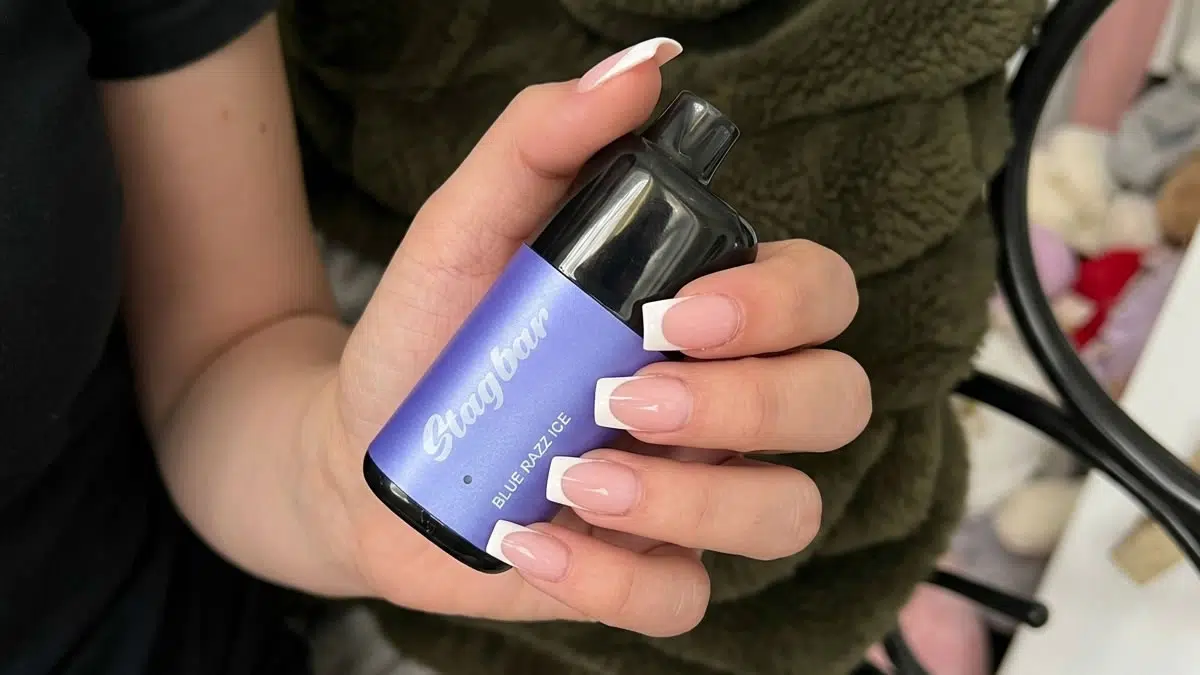
StagBar Vape 4in1 80K Puffs Disposable
The Stagbar 4-in-1 80,000 is a revolutionary high-capacity disposable featuring 4 flavors and 4 independent mesh coils in one device, delivering an industry-leading 80,000 puffs.
Verifying Product Legality and Consumer Safety
Public health advocates emphasize that adult consumers must understand product origins and regulatory status. Illicit or black-market products pose elevated risks because they bypass manufacturing standards and may be tampered with or adulterated with hazardous substances.
Paido Siahaan, Chairman of the Indonesian Vape Consumers Association, highlighted the need for transparent market standards:
“Manufacturers, associations, and the government must work together to deliver simple, consistent, and fact-based information. Consumers need clear information about the products they use.”
Clear regulatory oversight, accurate labeling, and transparent chemical profiles ensure that adult smokers seeking alternatives receive regulated, standard-compliant products.


