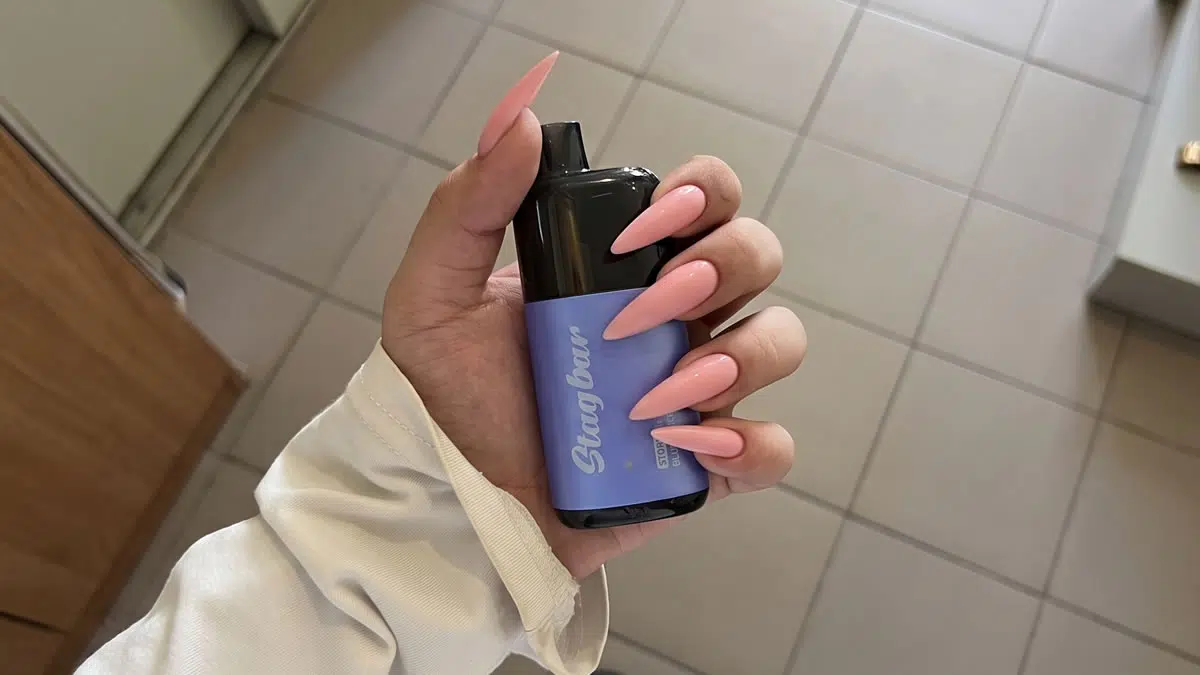
Vaping is legal in Japan, but domestic sales of nicotine-containing e-liquids are prohibited under pharmaceutical laws. Adult travelers may bring up to a one-month personal supply – capped at 120ml of liquid, 12,000 puffs, or 60 cartridges – into the country. Public use is strictly restricted to designated smoking areas under national health regulations.
- Zero Nicotine Domestic Market: Vape shops, convenience stores, and retailers in Japan only sell zero-nicotine (0 mg/ml) products and hardware.
- Customs Import Limits: Arriving adults (age 20+) can import up to 120ml of nicotine e-liquid, 12,000 puffs for disposables, and a maximum of two atomizers (one in use, one spare).
- Public Vaping Restrictions: Vaping on public streets or outside designated smoking booths carries municipal fines ranging from ¥1,000 to ¥5,000.
- Heated Tobacco Divergence: Heated tobacco products (IQOS, Ploom, glo) are regulated as tobacco and widely sold, whereas nicotine vapes are regulated as unapproved medical devices.
Travelers arriving in Tokyo, Osaka, or Kyoto often face unexpected restrictions regarding electronic cigarettes. While consuming vape products is entirely legal across the Japanese archipelago, the legal statutes governing retail sales, border imports, and public consumption differ substantially from Western regulatory frameworks.
Japan treats nicotine e-liquids as pharmaceutical products rather than tobacco. This distinction dictates where you can buy supplies, what you can carry through airport customs, and where you can legally exhale vapor.
Legal Classification: Why Nicotine E-Liquid Is Not Sold in Japan
The absence of nicotine vape juice in Japanese retail outlets is tied directly to the Pharmaceutical and Medical Device Act (PMDA / Yakukiho), administered by the Ministry of Health, Labour and Welfare (MHLW).
Under this statute, any liquid or vaporized substance containing active nicotine that is not derived from cured tobacco leaf is classified as a medicinal product. To be sold, distributed, or manufactured domestically, a nicotine e-liquid product must obtain a formal pharmaceutical marketing authorization.
Because no commercial vape manufacturer has applied for or received pharmaceutical clearance, no shop, convenience store, pharmacy, or vending machine in Japan can legally stock nicotine-containing e-liquids, pre-filled pods, or disposables.
Zero-nicotine e-liquids and standard vaping hardware fall outside the scope of pharmaceutical law. The Japanese government classifies 0 mg/ml e-liquids, open-system vape mods, tanks, and empty refillable pods as general merchandise, permitting their unrestricted domestic sale to adults.
Selling, trading, or commercially gifting nicotine e-liquids within Japanese borders violates pharmaceutical regulations. Consequently, tourists cannot buy nicotine refills from local vape shops or accept nicotine e-liquids from individuals inside the country.
Japan Customs Regulations: Bringing Vapes Across the Border
Although commercial sales of nicotine vapes are prohibited within Japan, the government permits inbound passengers to import a limited quantity for personal use under Japan Customs personal import provisions.
This personal exemption allows travelers to bring what the MHLW defines as a “one-month supply” without applying for an advance import monitoring certificate (Yakkan Shoumei). Anything exceeding these limits will be seized and discarded at the customs checkpoint.
| Product Category | Personal Import Limit | Regulatory Notes |
|---|---|---|
| Bottled Nicotine E-Liquid | Up to 120ml total | Combined volume across all bottles carried. |
| Nicotine Disposables | Up to 12,000 puffs total | Puff rating takes priority over liquid volume. |
| Nicotine Pods / Cartridges | Up to 60 units | Counts pre-filled, sealed cartridges. |
| Atomizers / Replaceable Coils | 1 in device + 1 spare | Applies to standalone rebuildable or stock coils. |
| Zero-Nicotine E-Liquids | Reasonable personal quantity | Treated as general merchandise, not medicine. |
| Heated Tobacco (HTP) Sticks | 200 sticks (10 individual packs) | Treated under standard Japan Customs Duty-Free Allowances. |
The 12,000-Puff Threshold on Disposable Vapes
Modern disposable vapes often feature large internal reservoirs rated for high puff counts. Japan Customs assesses disposables using a maximum threshold of 12,000 total puffs for a personal one-month supply.
A traveler carrying a single disposable device rated for 20,000 puffs exceeds the import threshold, even if the liquid volume inside remains below 120ml. To avoid confiscation, bring multiple lower-capacity disposables (such as two 5,000-puff units) rather than oversized hardware.
The Atomizer and Hardware Rule
Japanese import guidance restricts standalone atomizers (devices with an internal heating element and tank) to one operational unit inside the device, plus one spare unit. Sealed pod cartridges and disposables with non-removable heating elements are counted toward the 60-cartridge allowance rather than the atomizer rule.
Airline Battery Rules for Travelers
In accordance with International Civil Aviation Organization (ICAO) rules, all vape mods, pod systems, and disposable units containing lithium-ion batteries must be packed in carry-on baggage. They are strictly prohibited inside checked luggage due to fire safety protocols. E-liquid bottles should be packed inside clear, resealable plastic bags to comply with airport liquid screening rules.

StagBar Vape 4in1 80K Puffs Disposable
The Stagbar 4-in-1 80,000 is a revolutionary high-capacity disposable featuring 4 flavors and 4 independent mesh coils in one device, delivering an industry-leading 80,000 puffs.
Where to Buy Vaping Gear in Japan (Zero-Nicotine Only)
Travelers who require replacement hardware, fresh coils, or zero-nicotine flavored juices can find inventory across several retail channels in major metropolitan centers.
1. Specialized Vape Shops
Dedicated vape stores carry the widest selection of open-system hardware, replacement coils, pod cartridges, and 0 mg/ml e-liquids. Major urban chains such as VAPE Studio operate flagship locations near primary transit hubs in Tokyo, including Shibuya, Shinjuku, Ikebukuro, and Yurakucho.
Specialty shops frequently offer tasting bars where consumers can sample nicotine-free flavors before buying. Store staff in central entertainment districts often provide service in English.
2. Discount Retailers (Don Quijote)
Discount department stores, particularly MEGA Don Quijote locations in Shibuya, Shinjuku Kabukicho, and Osaka Dotonbori, stock entry-level pod kits, zero-nicotine disposable pens, and selected CBD vape cartridges. Most central Tokyo branches operate 24 hours daily.
3. Japanese Convenience Stores (Combini)
Major convenience chains – including 7-Eleven, FamilyMart, Lawson, and Ministop – carry a compact selection of zero-nicotine disposable vapes. Products such as the NICOLESS VAPE 2 and Air mini Pro are sold over the counter at fixed retail prices (typically around ¥1,350 for 800 to 900 puffs).
In convenience stores, disposable vapes are not displayed behind the tobacco counter. They are normally placed on open shelving next to smartphone cables, lighters, and electronic accessories. Customers must be at least 20 years old to purchase these items and may be prompted to verify their age on the register touchscreen.

| Product Type | Typical Retail Price (Tax Included) | Primary Retail Channel |
|---|---|---|
| Convenience Store Disposable (800–900 puffs) | ¥1,350 | 7-Eleven, FamilyMart |
| High-Capacity 0mg Disposable (Vape Shop) | ¥4,400 – ¥5,500 | Specialty Vape Shops |
| Entry-Level Pod Starter Kit | ¥2,200 – ¥6,050 | Vape Shops, Don Quijote |
| Replacement Coils (5-Pack) | ¥2,200 – ¥3,080 | Specialty Vape Shops |
| Zero-Nicotine E-Liquid (30ml – 60ml) | ¥2,750 – ¥3,850 | Specialty Vape Shops |
Public Vaping Rules: Where Can You Legally Vape?
Public usage rules for electronic cigarettes are enforced under the national Revised Health Promotion Act. Under this legal framework, vaping devices are treated identically to conventional combustible cigarettes and heated tobacco products.
Even though zero-nicotine vapor does not contain tobacco smoke, law enforcement officials and facility security personnel treat all vapor-producing devices under standard anti-smoking ordinances because visual vapor cannot be distinguished from tobacco smoke from a distance.
Street Vaping and Municipal Ordinances
Walking while vaping (aruki-tabako) is banned across major urban jurisdictions. Municipalities throughout Tokyo (including Shibuya, Shinjuku, and Chiyoda wards), Kyoto, and Nagoya prohibit vaping on public sidewalks, roads, and plazas outside of marked smoking enclosures.
Municipal ward wardens patrol high-traffic commercial zones and can issue immediate on-the-spot fines ranging from ¥1,000 to ¥5,000 to violators.
Osaka’s Citywide Public Ban
In preparation for the 2025 World Expo, Osaka City enacted an expanded smoking control ordinance that prohibits all street smoking and vaping across all public streets, parks, and plazas throughout the entire municipality. To accommodate users, the city maintains a network of partitioned public smoking booths (Osaka City Designated Smoking Areas) marked with green or blue signage.

Indoor Venues, Restaurants, and Transport
- Restaurants and Bars: Indoor smoking and vaping are prohibited by default. Some dining venues maintain sealed, ventilated smoking rooms (Kitsuen Senyoushitsu). In rooms designated for combustible tobacco, eating and drinking are prohibited.
- Hotels: Vaping is permitted exclusively in designated “Smoking Rooms.” Using an e-cigarette inside a designated “Non-Smoking Room” will activate optical fire sensors and trigger room recovery cleaning fees.
- Trains and Transit: All domestic rail lines, subways, and Shinkansen bullet trains are entirely smoke-free. All on-board smoking booths on Shinkansen lines have been decommissioned. Public transit users must utilize airport smoking booths or station plaza enclosures before boarding.

StagBar Vape 6in1 180K Puffs Disposable
The Stagbar 6-in-1 featuring a unique 6-flavor system and six independent mesh coils, this device allows users to switch between six distinct tastes in one sleek unit, delivering an unprecedented 180,000 puffs.
Heated Tobacco vs. Vapes: Market Differences
Japan’s smoke-free market is dominated by Heated Tobacco Products (HTPs) rather than liquid-based vapes. Devices such as IQOS (Philip Morris International), Ploom (Japan Tobacco), and glo (British American Tobacco) use genuine processed tobacco leaves heated below combustion temperatures.
Because HTPs utilize processed tobacco, they are regulated under the Tobacco Business Act rather than pharmaceutical law. This allows them to be sold with nicotine in every convenience store nationwide.
Data from the Global State of Tobacco Harm Reduction (GSTHR) indicates that conventional cigarette sales in Japan declined by more than 50% between 2015 and 2023, falling from 182.3 billion units to 88.1 billion units. During the same period, heated tobacco stick sales rose to over 62 billion units annually, with adult HTP prevalence reaching approximately 12.4% in 2023.
Certain restaurants and cafes offer designated “Heated Tobacco Only” seating areas where customers may eat and drink while using HTP devices. These exemptions rarely extend to liquid vape devices, which are generally relegated to standard non-dining smoking stalls.
Cannabinoid Regulations: CBD, CBN, and CBG Status
Travelers exploring alternative vape liquids must exercise caution regarding cannabinoids. Japan enforces strict narcotics control laws regarding cannabis-derived compounds.
Following legal revisions by the MHLW, the legal status of CBD (cannabidiol) is assessed by strict delta-9-THC residue limits rather than plant origin. For e-liquids and vape cartridges, the maximum permissible THC concentration is fixed at 0.1 ppm (parts per million). This threshold functions as a zero-tolerance standard.
Any imported e-liquid containing THC concentrations above 0.1 ppm is classified as an illicit narcotic under Japanese law, resulting in arrest and criminal prosecution rather than simple customs surrender.
Other cannabinoids frequently sold in international markets are subject to shifting controls:
- CBN (Cannabinol): Officially classified as a controlled narcotic substance by the MHLW on June 1, 2026. Manufacture, import, sale, and personal possession are completely illegal.
- CBG (Cannabigerol): Currently non-controlled and available in selected domestic CBD specialty shops.
Travelers should never pack foreign CBD vape liquids or cartridges when traveling to Japan. Foreign laboratory certificates of analysis (COAs) often fail to meet Japanese border testing criteria.
Safe Disposal of Disposable Vapes in Japan
Disposable e-cigarettes contain non-removable lithium-ion batteries and electronic circuitry, meaning they cannot be discarded into standard public trash cans, roadside recycling bins, or hotel room wastebaskets.
The Ministry of the Environment directs consumers never to crush or force open sealed electronic devices to extract built-in batteries, as mechanical puncture can cause lithium fires in municipal waste processing facilities.
Travelers seeking to discard depleted disposables have two compliant options:
- Hotel Front Desk Handover: Present the depleted device to hotel concierge or front desk staff and request electronic waste disposal (Kogata Kaden Kaishuu).
- Municipal Collection Boxes: Drop the device into yellow small-electronics recycling bins situated inside ward municipal offices, electronics megastores (Yodobashi Camera, Bic Camera), or selected community centers.
Frequently Asked Questions (FAQ)
-
Can I buy nicotine e-liquid at a Japanese pharmacy?
No. Although nicotine e-liquid is classified as a medicine under Japanese law, the Ministry of Health, Labour and Welfare has not approved any commercial nicotine e-liquid formulation for pharmaceutical sale. Pharmacies do not stock vape liquids.
-
What happens if I bring more than 120ml of nicotine e-liquid through customs?
Quantities exceeding the 120ml liquid volume cap or the 12,000-puff disposable cap will be intercepted by customs officers. You will be required to voluntarily surrender and forfeit the excess amount. Importing quantities above the limit without an approved import certificate is prohibited.
-
Is the legal age for vaping in Japan 18 or 20?
The legal age for purchasing tobacco, heated tobacco, and vaping merchandise in Japan is 20. While Japan lowered its general age of legal adulthood to 18 in 2022, age limits for smoking, alcohol consumption, and tobacco-related products remain strictly set at 20.
-
Can I vape inside my Airbnb or rental apartment?
Vaping in rental accommodations depends on property rules. If the rental contract specifies a non-smoking policy, indoor vaping is prohibited. Violating these rules can result in property damage claims or automated activation of localized smoke detection equipment.
-
Are zero-nicotine disposable vapes banned in Japan?
No. Zero-nicotine disposable vapes are legal, unregulated by pharmaceutical statutes, and sold across Japanese convenience stores, discount centers, and specialty retailers.
Disclaimer: This guide provides general informational overviews of Japanese tobacco, pharmaceutical, and municipal regulations current as of 2026. Import allowances, narcotic classifications, and local municipal smoking restrictions are subject to statutory amendments by the Ministry of Health, Labour and Welfare, Japan Customs, and municipal ward offices. Travelers are advised to consult official government portals prior to departure.


