The rapidly evolving market for tobacco alternatives has created a stark divide between two dominant product categories: disposable vapes and classic, refillable e-cigarettes. As traditional, reusable setups increasingly migrate to specialty retailers, gas stations, convenience stores, and supermarkets have become heavily dominated by single-use devices. This shift directly impacts consumer habits, daily routines, and the environment, making it essential for users to understand the technical and practical differences between these two systems.
Both options serve the same fundamental purpose – vaporizing an e-liquid to deliver nicotine and flavor – yet they diverge completely in their engineering, maintenance requirements, and overall cost structures. Deciding which system fits your lifestyle requires a closer look at how they operate, perform, and impact your wallet over time.
The Core Anatomy: Modular vs. Closed Systems
To understand the differences between these devices, it helps to look at their basic technical components. Every electronic cigarette relies on three core elements to function:
- The Battery: The power source that delivers electrical current.
- The Tank: The reservoir that holds the e-liquid.
- The Coil (Verdampferkopf): The heating element wrapped in wicking material (usually cotton) that vaporizes the liquid.
In a classic e-cigarette, these components are modular. The user can unscrew the tank to refill it with liquid from separate bottles, plug the battery mod into a charger, and replace the coil individually when the heating element degrades. This modularity gives the user complete control over the maintenance and longevity of the device.
Conversely, a disposable vape is a completely closed system. The battery, tank, and coil are permanently sealed inside a plastic or metal housing. The tank is pre-filled with e-liquid at the factory, and the battery is pre-charged to last exactly as long as the liquid inside. Once either the liquid runs dry or the battery dies, the entire unit becomes electronic waste, as none of the internal components are designed to be opened, refilled, or replaced by the user.
Daily Usability, Maintenance, and Routine
The daily experience of using these devices highlights the trade-off between convenience and control. Disposable vapes are engineered for maximum simplicity. They require no technical knowledge, feature no buttons or menus, and utilize draw-activation—meaning the user simply inhales to activate the heating element. There are no charging cables to manage or liquid bottles to carry, making them highly appealing to beginners or those seeking a hassle-free experience.
Classic e-cigarettes, however, require a dedicated maintenance routine. Users must monitor liquid levels to prevent “dry hits” – which occur when the coil burns dry cotton – and manually refill the tank through small fill ports. The battery must be charged regularly via USB-C or in an external charger.
Additionally, because the coil is a wear-and-tear item, the cotton inside accumulates residue over time, losing its absorption capacity and altering the flavor. This requires the user to manually swap out the coil every one to two weeks. While these steps require a basic understanding of the device’s mechanics, they quickly become second nature to experienced vapers.
Technical Specifications: Battery Power and Coil Customization
The technical capabilities of modular and disposable devices differ significantly, particularly regarding battery capacity (measured in milliampere-hours, or mAh) and coil resistance (measured in Ohms).
Classic e-cigarettes are built for performance and longevity. They feature robust batteries, often ranging from 2,000 to 3,000 mAh, and many models utilize removable batteries. This high capacity allows the device to output significant power throughout the day. Furthermore, modular systems allow users to install coils with different resistances. A lower-resistance coil (sub-ohm) produces massive vapor clouds and intense flavor, while a higher-resistance coil provides a tighter, more restricted draw similar to a traditional cigarette.
Disposable vapes are highly compact, meaning they carry much smaller batteries, typically between 400 and 800 mAh. This capacity is precisely calibrated by the manufacturer to drain just as the pre-filled e-liquid is exhausted. The coils inside disposables have a fixed, high resistance designed for a tight draw.
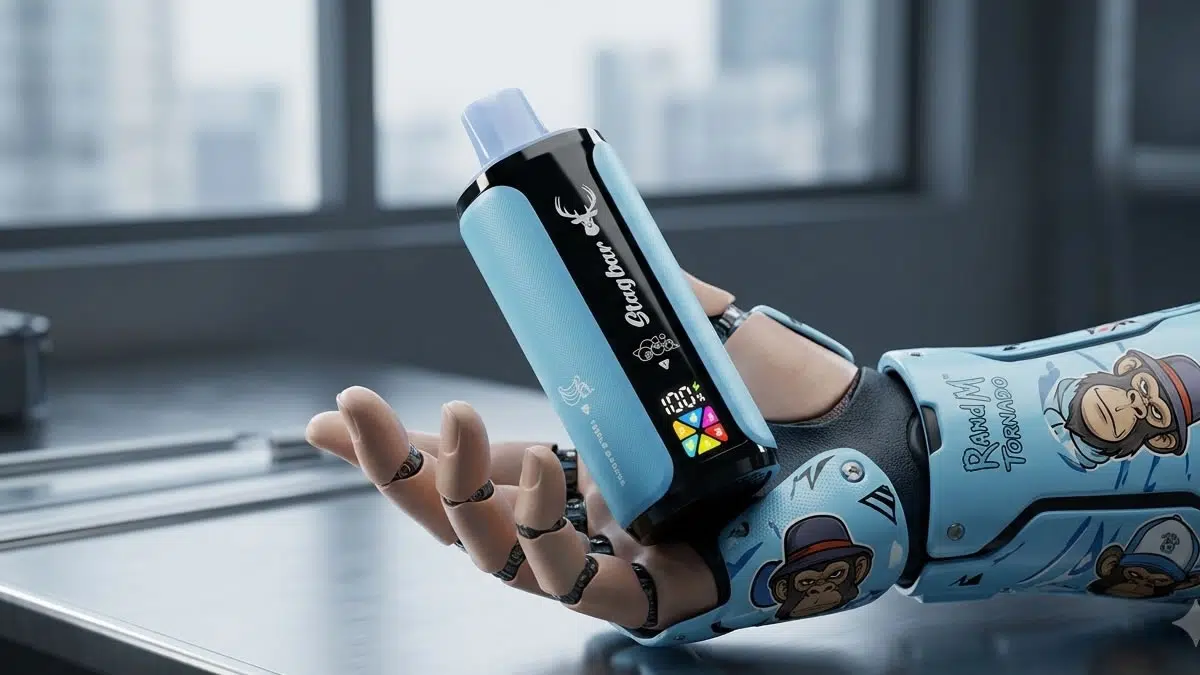
However, the industry has introduced hybrid systems to bridge this gap. Devices like the Stag Bar 6in1 pair a rechargeable base battery with pre-filled pod cartridges. This hybrid design retains the simplicity of a disposable while adding the battery longevity and reduced waste of a reusable system.

StagBar Vape 6in1 180K Puffs Disposable
The Stagbar 6-in-1 featuring a unique 6-flavor system and six independent mesh coils, this device allows users to switch between six distinct tastes in one sleek unit, delivering an unprecedented 180,000 puffs.
Direct Comparison: Disposables vs. Classic E-Cigarettes
The table below outlines the key practical and technical differences between the two vaping formats:
| Feature | Disposable Vapes | Classic E-Cigarettes |
|---|---|---|
| Upfront Cost | Very Low (Single-digit Euro range) | Moderate to High (Device, coils, and liquids) |
| Long-Term Cost | Extremely High (Paying for hardware with every purchase) | Very Low (Only buying liquid and replacement coils) |
| Battery Capacity | Low (400 – 800 mAh, non-rechargeable) | High (2,000 – 3,000 mAh, rechargeable/swappable) |
| Maintenance | None (Discard after use) | Regular (Refilling, charging, replacing coils) |
| Liquid Control | None (Pre-filled, fixed nicotine salt) | Complete (Choose flavor, PG/VG ratio, and nicotine strength) |
| Environmental Impact | High (Generates heavy plastic and heavy metal waste) | Low (Reusable hardware, recyclable liquid bottles) |
Financial Breakdown: Short-Term vs. Long-Term Expenses
The financial aspect is often the deciding factor for consumers. Disposable vapes are highly attractive due to their low barrier to entry. A user can purchase a ready-to-use disposable for a small one-time fee. However, because you are purchasing a new battery, microprocessor, and plastic housing with every single purchase, the cost per milliliter of e-liquid is incredibly high. For daily users, this pricing model quickly becomes unsustainably expensive.
A classic e-cigarette demands a higher initial investment to purchase the device kit, a few replacement coils, and bottles of e-liquid. However, once this hardware is acquired, the ongoing operating costs drop dramatically. E-liquid bottles and replacement coils are highly affordable, meaning a modular system will save a regular user hundreds of Euros over the course of a year compared to using disposables.
E-Liquid Chemistry and Flavor Profiles
The formulation of the e-liquids used in these devices also differs, directly influencing the throat hit and flavor intensity.
Disposable vapes almost exclusively utilize nicotine salt (Nikotinsalz) liquids. Nicotine salts have a lower pH level than standard freebase nicotine, allowing users to inhale high concentrations of nicotine without experiencing a harsh, scratching sensation in the throat. Additionally, because disposables operate at low wattages, manufacturers over-saturate their liquids with intense flavorings and cooling agents (like menthol) to deliver a punchy, vivid taste despite the low vapor production.
Classic e-cigarettes give the user absolute control over their liquid chemistry. Vapers can choose between standard freebase nicotine (for a realistic throat hit) or nicotine salts, adjust their nicotine strength down to the exact milligram, and customize the ratio of Propylene Glycol (PG) to Vegetable Glycerin (VG). A higher VG ratio produces dense, thick vapor clouds, while a higher PG ratio carries flavor more effectively and provides a sharper throat hit. This level of customization allows users to tailor their vaping experience precisely to their personal preferences.
Frequently Asked Questions (FAQ)
-
Can you refill a depleted disposable vape with e-liquid?
No, standard closed-system disposable vapes are completely sealed and are not designed to be refilled. Attempting to force them open can damage the internal battery and lead to leaks or safety hazards. However, hybrid systems allow you to discard the empty pre-filled pod and insert a new one while keeping and recharging the original battery base.
-
How do you know when to change the coil in a classic e-cigarette?
A worn-out coil will make itself known through a distinct change in performance. The flavor of your e-liquid will suddenly taste muted, flat, or slightly burnt. You may also notice a significant drop in vapor production, or the device may begin to “spit” unvaporized liquid through the mouthpiece. When these signs occur, it is time to swap the old coil for a fresh one.
-
Can I use any e-liquid in my classic e-cigarette?
Generally yes, but you must match the thickness of the liquid to your specific coil. Small, low-power coils with high resistance require thinner liquids with a higher Propylene Glycol (PG) content. Large, high-power sub-ohm coils require thicker liquids with a high Vegetable Glycerin (VG) content to prevent the liquid from leaking out of the tank’s airflow vents.