
The Federal Institute for Risk Assessment (BfR) and health advocates have updated guidelines for adult smokers transitioning to e-cigarettes, emphasizing safety, proper device selection, and regulatory compliance. This development comes amid stricter enforcement of youth protection laws, which strictly prohibit the sale of both nicotine-containing and nicotine-free vapes to minors, aiming to curb youth dependency while providing a structured path for adult smoking cessation.
Switching from traditional tobacco to e-cigarettes represents a significant lifestyle shift for many adult smokers seeking a less harmful alternative. However, navigating the complex market of pod systems, liquids, and legal frameworks requires careful preparation to avoid common beginner pitfalls and health risks.
E-cigarettes are electronic devices that heat a liquid solution to create an aerosol for inhalation. Because they do not burn tobacco, they do not produce the highly toxic tar and carbon monoxide associated with traditional cigarettes. Nevertheless, they still carry health risks and must be handled with care.
What is an E-Cigarette and How Does It Work?
An e-cigarette is a battery-powered device designed to vaporize a liquid solution (e-liquid). Unlike traditional cigarettes, there is no combustion involved in this process. However, the heating process can still generate potentially harmful chemical compounds, depending heavily on the device settings and the quality of the liquid used.
Most e-cigarettes consist of five primary components:
- Battery: The power source that drives the heating element.
- Atomizer: The chamber where vaporization occurs.
- Coil: The metal heating element wrapped around a wicking material (usually cotton).
- Tank or Pod: The reservoir that holds the e-liquid.
- Mouthpiece: The part through which the user inhales the vapor.
In basic beginner devices, the heating process is triggered automatically when the user draws on the mouthpiece. More advanced models require the user to press a fire button to activate the battery.
Is Vaping the Right Choice for You?
Starting to vape is only logical for adult smokers who are actively trying to transition away from traditional tobacco. If you do not currently smoke, you should not start vaping. Nicotine is highly addictive, and even nicotine-free e-cigarettes carry health risks.
The BfR emphasizes that the health risks of vaping stem from nicotine, chemical additives, aerosol carriers, impurities, and reaction products formed during heating. Furthermore, “dual use”—the simultaneous consumption of both tobacco cigarettes and e-cigarettes—is highly discouraged, as it fails to reduce exposure to harmful combustion toxins.
Under youth protection laws, the sale and mail-order shipping of all e-cigarettes, including nicotine-free variants and e-shishas, are strictly prohibited to minors. This ensures these products are kept out of the hands of children and teenagers.
Which E-Cigarette Type is Best for Beginners?
For those new to vaping, the ideal device should be user-friendly, leak-resistant, reliable, and capable of mimicking the physical sensation of smoking. A compact Mouth-to-Lung (MTL) pod system is generally the best fit for beginners.
MTL vaping involves drawing the vapor into the mouth first, holding it briefly, and then inhaling it into the lungs—a two-step process that closely mirrors how people smoke traditional cigarettes. Beginners should look for features like draw activation (no buttons), USB-C charging, clear battery indicators, and easily replaceable pods.
In contrast, large “Box Mods” with high wattage settings are designed for Direct-to-Lung (DL) vaping. These require advanced knowledge of electrical resistance, battery safety, and liquid consumption, making them unnecessarily complicated for beginners.

Comparing Pod Systems, Vape Pens, and Box Mods
Understanding the differences between device categories helps prevent expensive purchasing mistakes:
- Pod Systems: These are lightweight, highly portable, and incredibly simple. They use plastic “pods” that function as both the tank and the mouthpiece. Pods can be pre-filled (closed systems) or refillable (open systems). Refillable systems are far more cost-effective in the long run.
- Vape Pens: Slim, cylindrical devices that offer slightly larger tank capacities and longer battery life. They are ideal for beginners who want a pen-like form factor but prefer refilling their own liquid.
- Box Mods: Large, box-shaped devices with replaceable batteries, customizable screens, and adjustable power settings. While they offer maximum control over the vaping experience, they are too complex for a beginner’s first step.
Disposable vapes are popular due to their extreme simplicity, but they are highly discouraged for regular use. They generate massive amounts of electronic waste, are expensive over time, and cannot be refilled or repaired. To combat this environmental issue, regulations require retailers to establish dedicated return and recycling points for electronic cigarettes by June 30, 2026.

StagBar Vape 6in1 180K Puffs Disposable
The Stagbar 6-in-1 featuring a unique 6-flavor system and six independent mesh coils, this device allows users to switch between six distinct tastes in one sleek unit, delivering an unprecedented 180,000 puffs.
Buying E-Cigarettes: Legal and Safety Standards
When purchasing vaping products, consumers must prioritize safety, legality, and product authenticity. European and national regulations impose strict safety standards on all vaping hardware and e-liquids.

Under tobacco product regulations, several strict limits apply to nicotine-containing products:
- Refill liquid bottles must not exceed a volume of 10 ml.
- Disposable e-cigarettes and single-use cartridges are capped at a maximum capacity of 2 ml.
- The maximum allowable nicotine concentration in any e-liquid is capped at 20 mg/ml.
- All packaging must feature childproof closures, leak-free filling mechanisms, and clear ingredient disclosures.
Always buy from reputable, compliant retailers who enforce strict age verification processes. Avoid products sold without proper local labeling or those making exaggerated health claims.
Determining Your Ideal Nicotine Strength
Choosing the correct nicotine concentration is crucial for a successful transition. If the nicotine level is too low, cravings may trigger a relapse to smoking. If it is too high, it can cause headaches, nausea, or throat irritation.
| Previous Smoking Habit | Recommended Nicotine Strength (MTL) |
|---|---|
| Occasional or very light smokers | 3 – 6 mg/ml |
| Moderate smokers (up to 10–15 cigarettes/day) | 6 – 12 mg/ml |
| Heavy smokers (more than one pack/day) | 12 – 20 mg/ml |
| Non-smokers | Do not start vaping |
For those looking to gradually reduce their chemical dependency, the goal should be to start at an adequate level to curb cravings, and then slowly reduce nicotine concentrations over time. The BfR explicitly warns of the high addictive potential of nicotine-containing e-cigarettes.
Nicotine Salt vs. Freebase Nicotine: Which is Better?
E-liquids generally use one of two types of nicotine: freebase nicotine or nicotine salts (Nic Salt).
Freebase nicotine is the traditional form of liquid nicotine. It provides a distinct “throat hit” (a scratching sensation in the throat) that closely mimics the feeling of smoking a strong tobacco cigarette. However, at higher concentrations (above 12 mg/ml), the throat hit can become uncomfortably harsh for some users.
Nicotine salt is chemically altered to lower its pH level, making the vapor much smoother on the throat, even at the maximum legal limit of 20 mg/ml. It is absorbed into the bloodstream more rapidly, providing quick satisfaction. While highly effective for heavy smokers, the lack of throat irritation can sometimes lead beginners to consume more nicotine than intended. Users should monitor their consumption closely.
Selecting Your First E-Liquid: PG/VG Ratios Explained
E-liquids are composed of Propylene Glycol (PG), Vegetable Glycerin (VG), flavorings, and optional nicotine. The ratio of PG to VG determines the liquid’s viscosity and vapor characteristics.

For standard beginner pod systems, an evenly balanced 50/50 PG/VG ratio is highly recommended. PG acts as the flavor carrier and provides the throat hit, while VG is thicker and produces dense vapor clouds. Liquids with excessively high VG content (such as 70/30 or 80/20) are too thick for small pod coils, leading to dry hits and burnt coils. Conversely, highly fluid liquids can cause pods to leak.
When selecting flavors, tobacco and menthol blends offer a familiar transition for former smokers. While sweet, fruity, or dessert flavors are highly popular, they can sometimes encourage more frequent vaping. Additionally, the BfR advises caution regarding cooling agents and synthetic additives, emphasizing that the long-term effects of inhaling complex flavor compounds require ongoing scientific scrutiny.
Step-by-Step Guide: How to Use an E-Cigarette Correctly
Operating a modern pod system is straightforward, but following the correct startup procedure is vital to avoid damaging your equipment. When using a brand-new pod or coil, always follow these steps:
- Fill the pod or tank with your chosen e-liquid.
- Wait 5 to 10 minutes before taking your first puff. This process, known as “priming,” allows the cotton wick inside the coil to become fully saturated with liquid.
- If you vape immediately without waiting, the dry cotton will burn instantly, ruining the coil and producing a terrible, burnt taste.
Beginners should start with short, gentle puffs. Inhaling too hard, too fast, or too frequently can lead to coughing, throat irritation, dizziness, or mild nausea. These symptoms are clear indicators of incorrect technique, an unsuitable nicotine strength, or a dry coil.
Mastering the Inhalation Technique
Many beginners experience coughing because they attempt to draw on an e-cigarette the exact same way they would a traditional cigarette. E-cigarettes require a slower, more sustained, and gentler inhalation technique.
For MTL devices, take a slow, steady draw lasting 2 to 4 seconds, pull the vapor into your mouth, hold it briefly, and then inhale it into your lungs. Direct-to-Lung (DL) vaping, which involves inhaling vapor directly into the lungs like a deep breath, is not recommended for beginners as it produces massive vapor volumes that can easily trigger intense coughing fits.
Top 10 Common Mistakes Beginners Make
Most negative initial experiences with vaping do not stem from the activity itself, but rather from easily avoidable mistakes:
- Incorrect Nicotine Levels: Choosing a level that is too low leads to constant chain-vaping, while a level too high causes headaches and throat irritation.
- Forgetting to Prime the Coil: Vaping immediately after filling a dry pod destroys the heating element.
- Using Burnt Coils: Continuing to use a coil after the flavor has degraded exposes you to harmful burnt organic matter.
- Improper Storage: Leaving devices in hot cars or under direct sunlight can degrade batteries and cause liquid leakage.
- Improper Disposal: Throwing disposable vapes or lithium batteries into household trash is an environmental hazard.
- Over-vaping: Puffing continuously without breaks, leading to mild nicotine overdose (headaches, nausea).
- Ignoring Leakage: Allowing leaked liquid to sit in the battery connection chamber, ruining the device’s electronics.
- Buying Unregulated Products: Purchasing cheap, non-compliant hardware or liquids from unverified online sources.
- Neglecting Hydration: Failing to drink enough water, as PG and VG naturally dry out the mouth and throat.
- Treating Vapes as Harmless: Forgetting that e-cigarettes are smoking cessation tools, not risk-free lifestyle toys.

StagBar Vape 4in1 80K Puffs Disposable
The Stagbar 4-in-1 80,000 is a revolutionary high-capacity disposable featuring 4 flavors and 4 independent mesh coils in one device, delivering an industry-leading 80,000 puffs.
Troubleshooting: Why Does Vaping Cause Scratching or Coughing?
If you experience throat irritation or coughing when you start vaping, do not panic. This is a common reaction as your respiratory tract adjusts to vapor instead of dry smoke.

First, check your nicotine strength and type. Switching from freebase nicotine to a smoother nicotine salt can immediately alleviate harsh throat irritation. Second, ensure your liquid has a balanced PG/VG ratio, as high PG content can dry out your throat. Lastly, make sure you are drinking enough water, as PG and VG naturally absorb moisture from your mouth and throat. If persistent respiratory discomfort occurs, stop vaping immediately and consult a medical professional.
When and How to Replace Pods and Coils
Coils and pods are consumable items that degrade over time. You will need to replace your coil or pod when you notice a burnt or bitter taste, a significant reduction in vapor production, or if the pod begins to leak persistently.
The lifespan of a coil depends on your vaping habits and the type of liquid used. Highly sweetened e-liquids (containing sucralose or heavy dessert flavorings) leave caramelized residues on the heating wire, causing the coil to burn out much faster. On average, a coil lasts between one to three weeks of regular use. Always keep spare coils or replacement pods on hand to avoid being left without a functioning device.
Maintenance, Cleaning, and Battery Safety
Keeping your e-cigarette clean ensures optimal performance and extends the lifespan of your hardware. Use a dry tissue or cotton swab to regularly clean the metal contact points inside the device where the pod connects to the battery. Condensation and minor liquid leaks can accumulate here, potentially causing electrical short circuits.
Battery safety is paramount. Never use a device if the battery casing is dented, swollen, or damaged. Avoid charging your e-cigarette overnight unsupervised, and never expose the device to extreme temperatures. If your device becomes unusually hot during charging or use, disconnect it immediately and stop using it.
Understanding the Financial Costs of Vaping
The initial cost of transitioning to vaping is highly variable, but refillable systems are consistently the most economical choice over time.

A high-quality starter pod system typically costs between €15 and €30. Ongoing expenses include replacement pods or coils (around €2 to €4 each, replaced every few weeks) and e-liquids (typically €4 to €6 per 10 ml bottle). Compared to the high daily cost of smoking traditional tobacco or buying single-use disposable vapes, a refillable pod system pays for itself within the first few weeks of use.
Environmental Impact and Responsible Disposal
E-cigarettes contain valuable electronic components, plastics, and lithium-ion batteries. Consequently, they must never be thrown into standard household waste. Improperly discarded batteries pose severe fire hazards at waste treatment facilities and leak heavy metals into the soil.
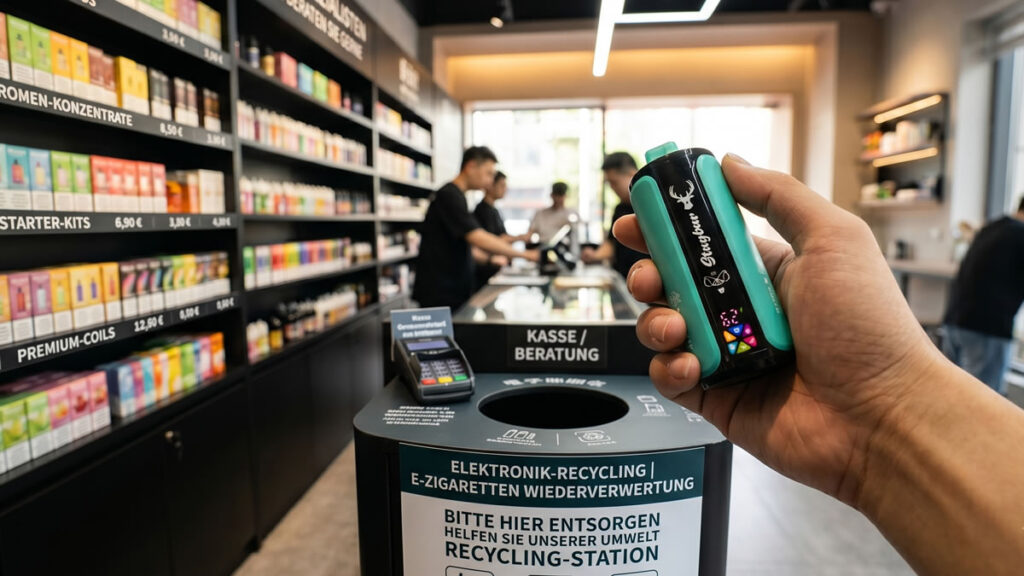
Always dispose of old devices, batteries, and empty pods at local recycling centers, municipal e-waste collection points, or designated retail drop-offs. Additionally, ensure that all e-liquids are stored securely and childproof. The BfR reports that pediatric poisoning incidents frequently involve children accidentally swallowing improperly stored liquid refills.
Vaping Etiquette and Public Restrictions
While vaping does not produce second-hand smoke, the exhaled aerosol can still be disruptive or unpleasant to those around you. Public transport operators, restaurants, hotels, and workplaces generally treat e-cigarettes the same as traditional tobacco products, banning their use indoors.
Always ask for permission before vaping in enclosed spaces, and avoid vaping in the immediate presence of children, pregnant women, or individuals with respiratory conditions.
Can E-Cigarettes Help You Quit Smoking?
For many adult smokers, e-cigarettes serve as a valuable tool to transition away from combustible tobacco. However, they are not officially classified or medically approved as smoking cessation aids. To successfully quit smoking using e-cigarettes, you should establish a structured plan: completely eliminate tobacco cigarettes, select an appropriate starting nicotine level, and gradually reduce the nicotine concentration over time with the ultimate goal of becoming entirely nicotine-free.
For those seeking comprehensive support, professional counseling, behavioral therapy, and structured cessation programs are highly recommended. The BfR directs individuals looking to quit smoking to the official resources provided by the Federal Institute for Public Health.

StagBar Nexus 60K Disposable Vape
The Stagbar Nexus 60,000 is a premium, high-capacity disposable vape built for endurance and flavor depth. Powered by a rechargeable 850mAh battery, it offers a massive 60,000 puff lifespan with a wide selection of rich, vibrant flavors.
Comprehensive Beginner Checklist
Before purchasing your first device, review this checklist to ensure you are making a safe, informed decision:
- Are you an adult smoker looking to transition away from tobacco?
- Have you selected a simple, beginner-friendly MTL pod system?
- Are replacement coils or pods readily available for your chosen device?
- Is your chosen e-liquid legally compliant, featuring proper local labeling and childproof caps?
- Have you selected an appropriate nicotine strength based on your previous smoking habits (capped at 20 mg/ml)?
- Do you know where your local electronic waste recycling center is located?
Top Tips for a Successful Start
To ensure a smooth transition, keep these final tips in mind: start with a simple MTL device, purchase only legally compliant products, prime your coils diligently, and maintain a slow, steady drawing technique. By avoiding dual use and managing your nicotine intake responsibly, you can successfully navigate your transition away from combustible tobacco.


