
Public health authorities and recent clinical studies have confirmed that replacing traditional tobacco with electronic cigarettes provides a highly effective, significantly less harmful pathway to quitting smoking. As the devastating health impacts of combustible cigarettes continue to drive global health initiatives, vaping has emerged as a critical tool that directly addresses both the chemical addiction and the behavioral habits of smokers.
This comprehensive approach to tobacco harm reduction is yielding unprecedented success rates in smoking cessation. By understanding the fundamental differences between vaping and smoking, selecting the appropriate equipment, and following a structured nicotine reduction plan, smokers can dramatically increase their chances of quitting permanently.
Electronic Cigarettes vs. Traditional Tobacco: Health and Benefits
Choosing to vape instead of smoke represents a radical shift in how nicotine is delivered to the body. Understanding this essential distinction is the first step in making an informed decision to protect your long-term health and well-being.

Why Vaping is a Healthier Alternative
Extensive scientific research confirms that vaping is substantially less harmful than smoking primarily because it entirely eliminates the toxic combustion process. When tobacco burns, it releases thousands of dangerous chemicals, many of which are known carcinogens.
According to landmark reviews by Public Health England, vaping is estimated to be around 95% less harmful than smoking traditional cigarettes. This staggering difference is attributed to several key factors:
- The Absence of Combustion: As highlighted by the Institut Pasteur, the aerosol vapor produced by an e-cigarette contains less than 1% of the toxic substances found in traditional tobacco smoke.
- Zero Tar and Carbon Monoxide: Unlike combustible cigarettes, vaporizing e-liquid does not produce sticky tar that coats the lungs, nor does it release carbon monoxide, a toxic gas that starves the blood of oxygen.
- Controlled Nicotine Delivery: E-liquids allow users to precisely control their nicotine intake. This facilitates a progressive reduction strategy, helping users eventually break free from nicotine entirely.
It is crucial to understand that the nicotine present in e-liquids is not carcinogenic in itself. While it is the addictive substance that keeps smokers hooked, it does not cause the respiratory diseases or cancers associated with smoking. Instead, nicotine acts as a valuable ally during the withdrawal process, helping to manage cravings and prevent relapses.
The Financial and Physical Impact
The data clearly illustrates the massive advantages of vaporizers over combustible cigarettes. Beyond the significant reduction in toxicity, the financial and immediate physical benefits are substantial.
Financially, quitting smoking by switching to an e-cigarette is highly cost-effective. While there is an initial investment in the device, the ongoing cost of e-liquid and replacement coils is a fraction of the price of heavily taxed tobacco. Replacing a pack-a-day habit with vaping can save an average user over €3,100 annually.
Physically, the positive effects manifest rapidly. Within the first few days without combustible tobacco, your blood pressure begins to normalize. Because you are no longer inhaling toxic smoke, your body immediately begins a metabolic rebalancing process.
After just one week of transitioning to vaping, most users report a notable improvement in their breathing and cardiovascular stamina. Furthermore, as the tar begins to clear from your system, your dulled senses of taste and smell will noticeably improve within a few short weeks.
Is Quitting Smoking with a Vape Truly Effective?
Recent scientific research has consistently demonstrated that the electronic cigarette is a more effective cessation tool than traditional nicotine replacement therapies (NRTs). Thanks to its ability to mimic the physical act of smoking, success rates for complete cessation are remarkably high.
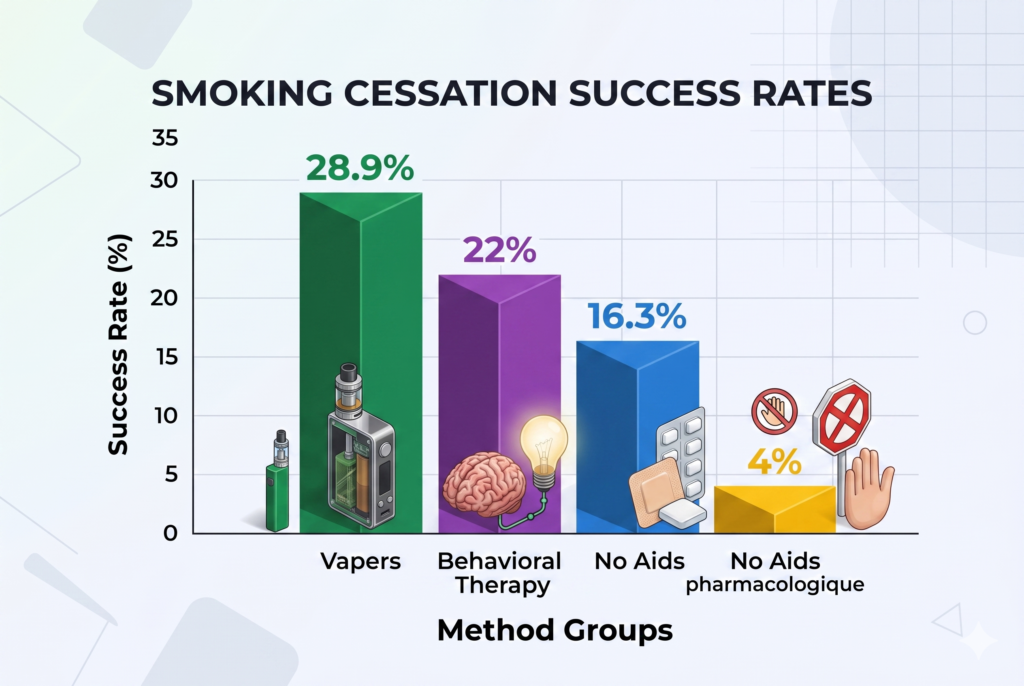
Scientific Studies on Vaping and Smoking Cessation
According to the highly respected Cochrane Review in 2025, the use of nicotine-containing vaping devices greatly favors total smoking cessation. To successfully transition from cigarettes to vaping, it is important to look at the solid clinical evidence validating this approach.
- ESTxENDS Trial (2024): This comprehensive study recorded a 28.9% abstinence rate among vapers, compared to just 16.3% for the control group using traditional methods.
- NDARC Sydney Study (2025): Researchers found a 28.4% total cessation rate using vaping, drastically outperforming the 9.6% success rate of those relying solely on nicotine patches.
- NEJM Study (2019): The New England Journal of Medicine reported that vaping doubled the efficacy of cessation, showing an 18% success rate versus 10% for standard NRTs.
- Cochrane Review (2025): Long-term data shows a 10% durable success rate for vaping, compared to 6% for nicotine gums and a mere 4% for those attempting to quit unassisted.
Today, healthcare professionals increasingly recognize that vaping provides concrete assistance for quitting smoking. The ability to maintain the familiar hand-to-mouth gesture while progressively reducing nicotine consumption explains these excellent health outcomes.
The Role of Medical Professionals in Your Transition
Consulting a healthcare professional can significantly improve your chances of successfully and permanently quitting smoking. With specialized medical support tailored to tobacco cessation, long-term abstinence becomes a much more attainable goal.
An expert can help adapt your methodology, especially if you plan to combine vaping with other substitutes like patches for heavy cravings. This personalized guidance helps prevent common beginner mistakes, ensures you are using the correct nicotine strength, and maintains your motivation throughout your journey.

StagBar Vape 6in1 180K Puffs Disposable
The Stagbar 6-in-1 featuring a unique 6-flavor system and six independent mesh coils, this device allows users to switch between six distinct tastes in one sleek unit, delivering an unprecedented 180,000 puffs.
Choosing the Right Device and Nicotine Dosage
Selecting the appropriate e-cigarette and the correct initial nicotine strength is the most critical factor in achieving a successful transition. By tailoring your equipment to your current smoking habits, you drastically increase your chances of quitting permanently.
How to Determine Your Ideal Nicotine Strength
The primary advantage of electronic cigarettes over combustible tobacco is the precise control over your nicotine intake. Finding the right initial dosage guarantees throat comfort, satisfies your chemical cravings, and prevents immediate relapses.
If your nicotine level is too low, you will experience severe withdrawal symptoms and may return to smoking. If it is too high, you may experience headaches or throat irritation. To help find your starting point, consider consulting a detailed vape nicotine dosage guide.
The Fagerström test is a widely used clinical tool that can help refine this choice by evaluating your specific degree of nicotine dependence. Based on general consumption, here is a standard guideline for new vapers:
| Smoker Profile | Cigarettes per Day | Recommended Initial Nicotine Strength | Vaping Characteristics |
|---|---|---|---|
| Light Smoker | 1 – 5 | 3 mg/ml | Provides a light throat hit; ideal for occasional use and pronounced e-liquid flavors. |
| Moderate Smoker | 6 – 10 | 6 mg/ml | Offers an optimal balance between nicotine satisfaction and flavor preservation. |
| Regular Smoker | 11 – 20 | 11 – 12 mg/ml | Delivers a pronounced throat sensation very similar to a traditional combustible cigarette. |
| Heavy Smoker | More than 20 | 16 – 18 mg/ml | Provides an intense sensation; requires careful attention to avoid accidental nicotine overconsumption. |
It is vital that the reduction of your nicotine levels is done gradually. You should maintain your initial dosage for several weeks until you feel completely stable and have no urge to smoke a traditional cigarette. Only then should you decrease the strength in small steps to avoid withdrawal discomfort.
Practical Differences and Getting Started with Pods
Understanding the practical differences between vaping and smoking helps ensure a smooth transition. Vaping reproduces the comforting physical gesture of smoking without the toxic smoke, lingering odors on your clothes, or secondhand smoke risks to your family.
Because the delivery method is different, you may experience minor adjustment issues. To anticipate and manage any physical discomforts related to quitting tobacco, it is highly recommended to familiarize yourself with common vape withdrawal symptoms.
For beginners, “Pod” systems are widely considered the ideal format for initiating smoking cessation. These devices combine simplicity, efficiency, and discretion, making them highly approachable for those intimidated by complex vaping hardware.
Pod systems are incredibly compact and often feature draw-activation, meaning they produce vapor simply by inhaling, perfectly mimicking the natural draw of a cigarette. With no complex wattage settings to manage, exploring beginner vape pods is the best way to ensure a gentle and successful transition to vaping.

StagBar Vape 4in1 80K Puffs Disposable
The Stagbar 4-in-1 80,000 is a revolutionary high-capacity disposable featuring 4 flavors and 4 independent mesh coils in one device, delivering an industry-leading 80,000 puffs.
Withdrawal Timeline, Side Effects, and Practical Tips
Having a detailed understanding of the different phases of nicotine withdrawal and its characteristic symptoms will significantly reinforce your determination. Every stage of quitting tobacco presents unique challenges, but all are entirely surmountable with the right behavioral strategies.
The Timeline for Quitting Smoking with a Vape
Smoking cessation generally follows a predictable progression divided into four distinct phases. Understanding this timeline helps you persevere and trust the process as your body heals.
- Days 0 to 3: This is the most intense initial phase. Users often experience irritability, anxiety, mild nausea, headaches, and strong psychological cravings for combustible tobacco. Your vape is crucial here to manage the chemical withdrawal.
- Days 3 to 7: During this transition period, the physical nicotine withdrawal peaks and begins to subside. However, you may experience marked fatigue, minor digestive issues, and persistent anxiety as your body adjusts.
- Days 7 to 21: This is where major physical improvements occur. You will notice a significant reduction in “smoker’s cough,” experience deeper and more restorative sleep, and enjoy a much more stable mood.
- Days 21 to 28: By the end of the first month, mental concentration improves drastically. Cravings for traditional cigarettes become infrequent and easily manageable, and the initial physical withdrawal symptoms almost entirely disappear.
Beyond the first month, your respiratory system will continue to recover and regenerate. Emotional triggers tied to smoking will stabilize, and the urge to smoke will fade into the background. Maintaining your vaping routine during this crucial first year greatly increases your chances of permanent success.
Short-Term Side Effects of Vaping
It is important to note that the side effects of transitioning to vaping are generally mild and temporary. In the short term, using an e-cigarette poses no major risks to your overall health compared to continuing to smoke.
You may experience an initial cough as your respiratory tract adapts to inhaling an aerosol vapor rather than dry smoke. A minor sore throat or slight dehydration is also common, largely due to the propylene glycol (PG) in the e-liquid.
These symptoms can easily be alleviated by drinking more water throughout the day or switching to an e-liquid with a higher Vegetable Glycerin (VG) ratio. If you experience slight nausea or dizziness, it is likely a sign of mild nicotine overconsumption; simply reduce your nicotine strength by a few milligrams and wait a few days.
Behavioral Strategies for Long-Term Success
Combining vaping with proven behavioral modifications will double your chances of quitting tobacco for good. Techniques such as deep breathing exercises, regular physical activity, and mindfulness meditation can drastically reduce daily stress-induced cravings.
Optimizing your sleep quality by keeping your bedroom cool and adopting a balanced diet will support your body’s metabolic recovery. Joining a support group or consulting a cessation counselor can provide vital motivation during difficult weeks.
Finally, keeping a detailed tracking journal allows you to monitor your daily e-liquid consumption, track your nicotine reduction progress, and celebrate the concrete financial and health milestones you achieve along the way.


