Deciding to quit smoking is one of the most vital steps you can take to improve your long-term health. However, going “cold turkey” has an incredibly high failure rate, with 85% to 95% of smokers relapsing within the first year1. Understanding the science of nicotine delivery and utilizing modern harm-reduction tools can dramatically shift these odds in your favor.
By leveraging clinical trial insights, public health data, and structured transition protocols, this comprehensive guide outlines exactly how to navigate your journey away from combustible tobacco for good.
Why Traditional Quit Methods Fail: The Dual Addiction
Smoking is a complex, multi-layered addiction. To successfully beat it, you must understand that you are fighting two distinct battles simultaneously:
- The Physical Addiction: Your brain’s chemical dependency on rapid nicotine spikes in the bloodstream.
- The Behavioral Habit: The deeply ingrained physical rituals, including the hand-to-mouth motion, the sensation of inhaling and exhaling, the throat hit, and the social breaks associated with lighting up.
Traditional Nicotine Replacement Therapies (NRTs) like patches, gums, and inhalers only address the physical addiction. A nicotine patch delivers a slow, steady stream of nicotine over several hours, but it completely fails to satisfy the acute craving triggered by stress or the physical desire to hold a cigarette. This sensory void is why so many smokers relapse during high-stress moments.
Vaping and certain modern alternatives address both sides of the dual addiction. They provide immediate physical nicotine satisfaction while perfectly mimicking the sensory and behavioral habits of smoking.
The Science of Harm Reduction: What the Evidence Shows
A common misconception is that nicotine is the primary toxic agent in cigarettes. While nicotine is highly addictive, it is relatively low-harm—comparable in cardiovascular risk profile to caffeine. The real danger of smoking comes from combustion.
When tobacco burns, it releases over 7,000 chemicals, including tar, carbon monoxide, formaldehyde, and at least 70 known carcinogens. Because electronic cigarettes heat a liquid solution rather than burning organic material, they do not produce these toxic combustion byproducts.
The scientific consensus on vaping as a smoking cessation tool is robust:
- The Cochrane Review: A major meta-analysis of dozens of clinical trials confirmed that nicotine-containing e-cigarettes help significantly more people quit smoking than traditional NRTs or behavioral support alone.
- Public Health England (PHE): Landmark, multi-year evidence reviews consistently conclude that vaping is at least 95% less harmful than smoking combustible cigarettes.
- Clinical Trial Data: A review of clinical trials published in the Journal of Multidisciplinary Healthcare2 confirmed that vaping interventions consistently yield higher abstinence rates and present a vastly lower risk of adverse events compared to smoking.
Comparing Smoking Cessation Methods
To choose the right path, it helps to compare how different cessation tools perform across key metrics:
| Method | Nicotine Delivery Speed | Behavioral Replacement | Relative Success Rate | Est. Annual Cost |
|---|---|---|---|---|
| Combustible Cigarettes | Extremely Fast (10-20 seconds) | Full Ritual | N/A (The Hazard) | $3,000+ £2,500+ |
| Vaping (Pod Systems) | Fast (20-60 seconds) | High (Hand-to-mouth, throat hit) | Highest (Approx. 2x NRTs) | $600 – $1,000 |
| Nicotine Pouches | Moderate (10-15 minutes) | Low (Oral fixation only) | Moderate (Great for vape-free zones) | $500 – $800 |
| NRT Patches / Gum | Slow (30 mins to 4 hours) | None | Low to Moderate | $800 – $1,200 |
| Cold Turkey | None | None | Lowest (3% – 5% success) | \$0 |

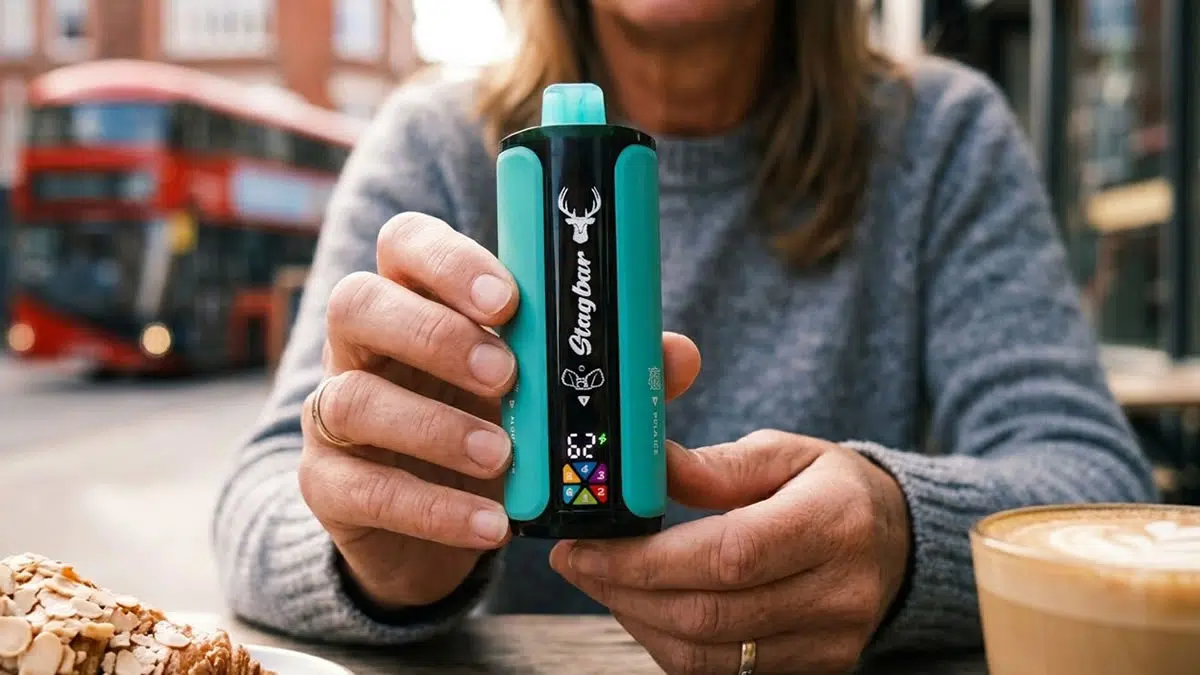
StagBar Vape 6in1 180K Puffs Disposable
The Stagbar 6-in-1 featuring a unique 6-flavor system and six independent mesh coils, this device allows users to switch between six distinct tastes in one sleek unit, delivering an unprecedented 180,000 puffs.
The Step-by-Step 4-Week Transition Protocol
Rushing to quit overnight often causes intense withdrawal shock. A structured, gradual transition gives your body and mind time to adapt to the cleaner alternative.
Week 1: The Dual-Use Phase (Days 1–7)
The Goal: Get comfortable with your vape device without forcing yourself to completely give up cigarettes yet.
During this week, purchase a simple, high-quality pod system and an e-liquid that matches your smoking habits. Every time you feel the urge to smoke, vape for five minutes first. If you still crave a cigarette afterward, allow yourself to have one. You will naturally find your cigarette consumption dropping by 50% or more as your brain begins to accept the vape as a viable source of nicotine.
Week 2: The Substitution Phase (Days 8–14)
The Goal: Replace 80% of your daily cigarettes with your vape.
Identify your most critical “trigger” cigarettes—such as the one with your morning coffee, after meals, or during work commutes. Keep these as your primary vaping sessions. Extend your vaping time to 10 minutes to ensure your nicotine cravings are fully satisfied. By day 14, you should only be smoking 2 to 3 cigarettes per day.
Week 3: The Elimination Phase (Days 15–21)
The Goal: Achieve complete cigarette abstinence.
Choose a specific “Quit Day” this week. Throw away all remaining cigarettes, lighters, and ashtrays. Deep clean your living spaces and car to remove the lingering smell of stale smoke. When cravings strike, vape generously. Do not restrict how much you vape during this critical week; your immediate priority is strictly staying away from combustible tobacco.
Week 4: The Reinforcement Phase (Days 22–28)
The Goal: Solidify your smoke-free identity.
By now, your sense of taste and smell will have dramatically improved, and your morning smoker’s cough will begin to subside. Continue vaping at your established nicotine level. Avoid high-risk social situations where you might be tempted to ask for a cigarette. Calculate the money you have saved over the past month and treat yourself to a reward to celebrate your progress.
Choosing the Right Equipment and Nicotine Strength
Selecting the wrong device or nicotine strength is the number one reason people fail to transition successfully. To ensure success, keep these guidelines in mind:
1. Select a Mouth-to-Lung (MTL) Device
Avoid large, complex “mod” vapes that produce massive clouds. Instead, opt for a simple Pod System or a Cigalike. These devices feature a restricted airflow that closely mimics the tight draw of a traditional cigarette filter, providing the familiar “throat hit” that smokers crave.
2. Match Your Nicotine Strength to Your Smoking History
Using too little nicotine will leave you unsatisfied and vulnerable to relapse. Use this general guide to find your starting point:
- Heavy Smokers (1+ packs/day): Start with 20mg/mL (2% in the UK/EU) or up to 50mg/mL (5% in the US) Nicotine Salts. Nicotine salts are chemically formulated to absorb rapidly into the bloodstream, mimicking the near-instant satisfaction of a cigarette without being harsh on the throat.
- Moderate Smokers (10–20 cigarettes/day): Start with 10mg/mL to 20mg/mL nicotine salts.
- Light Smokers (Under 10 cigarettes/day): Start with 3mg/mL to 6mg/mL Freebase Nicotine or low-strength nicotine salts.
3. Consider Nicotine Pouches for Convenience
Nicotine pouches are small, tobacco-free portions that sit discreetly under your lip. While they do not replicate the physical hand-to-mouth action of smoking, they are incredibly useful for long flights, public transit, or workplaces where both smoking and vaping are strictly prohibited.
Common Pitfalls to Avoid
- Rushing to Lower Nicotine: Do not try to reduce your vape’s nicotine level too quickly. Focus entirely on staying off cigarettes for at least 3 to 6 months before you even consider stepping down your nicotine strength.
- Buying Cheap Gas Station Vapes: Low-quality, poorly regulated devices often leak, have terrible battery life, and deliver inconsistent vapor. Visit a dedicated, reputable vape shop to purchase reliable hardware.
- Not Having a Backup: Always keep a secondary device, spare pods, or a charged battery on hand. If your primary device dies or breaks while you are out, you are highly likely to buy a pack of cigarettes out of convenience.

StagBar Vape 4in1 80K Puffs Disposable
The Stagbar 4-in-1 80,000 is a revolutionary high-capacity disposable featuring 4 flavors and 4 independent mesh coils in one device, delivering an industry-leading 80,000 puffs.
Frequently Asked Questions (FAQs)
-
Is vaping actually safer than smoking?
Yes. While not entirely risk-free, major global health institutions—including the UK’s National Health Service (NHS) and the Royal College of Physicians—agree that vaping is at least 95% less harmful than smoking. This is because vaping eliminates the inhalation of toxic tar, carbon monoxide, and cancer-causing combustion gases.
-
What are the common side effects of switching to vaping?
As your body adjusts, you may experience mild, temporary side effects such as a dry mouth, throat irritation, a slight cough, or mild headaches. These are normal signs of your respiratory tract clearing out tobacco residue and can be easily managed by staying well-hydrated and adjusting your vaping style.
-
Can I use vaping to eventually quit nicotine altogether?
Absolutely. Many successful former smokers use vaping as a stepping stone to complete nicotine freedom. Once you are completely secure in your smoke-free life, you can gradually step down your e-liquid nicotine strength (e.g., from 20mg to 12mg, then 6mg, 3mg, and finally 0mg) until you can put the device down entirely.
-
Will secondhand vapor harm the people around me?
There is currently no evidence that secondhand vapor from e-cigarettes poses a health risk to bystanders. Unlike secondhand cigarette smoke, which contains highly toxic combustion products, vape vapor dissipates rapidly and carries negligible risk. However, as a courtesy, you should avoid vaping around children, pregnant women, and those with respiratory conditions like asthma.
-
How much money will I save by switching?
Because taxes on combustible tobacco are incredibly high, switching to a reusable pod system can save the average pack-a-day smoker between $1,500 and $2,800 (£1,200 to £2,000) every year, even after factoring in the ongoing cost of replacement pods and e-liquids.
- Smoking relapse reasons among current smokers with previous cessation experience in Shanghai: A cross-sectional study – https://pmc.ncbi.nlm.nih.gov/articles/PMC10364243/ ↩︎
- Taylor & Francis Online (Journal of Multidisciplinary Healthcare): Use of Vaping as a Smoking Cessation Aid: A Review of Clinical Trials – https://www.tandfonline.com/doi/full/10.2147/JMDH.S419945 ↩︎


