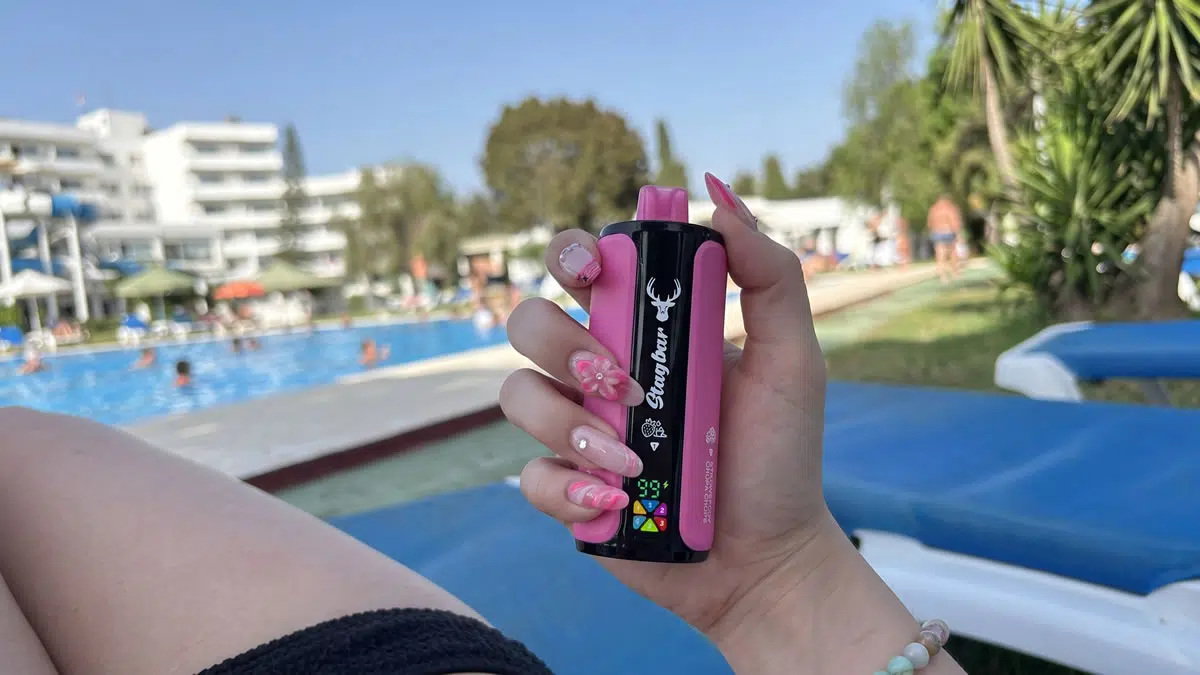
Germany enforces a blanket minimum age requirement of 18 for acquiring, consuming, or receiving any electronic vaporization product. Under national child protection laws, commercial vendors cannot distribute these items to minors under any circumstances. This restriction governs physical storefronts, service stations, kiosks, and remote mail-order platforms operating across the country.
The core statutory foundation for this enforcement is Section 10 of the Protection of Young Persons Act (Jugendschutzgesetz or JuSchG). While many consumers assume restrictions target chemical nicotine exclusively, German legislation intentionally treats all vaporization hardware, e-liquids, and electronic shishas under a single legal standard.
The Statutory Foundation: Section 10 of the Jugendschutzgesetz
The German legal framework for vapor products is codified within Section 10 of the JuSchG. Historically focused on conventional combustible tobacco, this statute prohibits businesses from selling tobacco products to children and adolescents in restaurants, physical shops, and general public venues. Public use by minors is prohibited by law.
Paragraph 4 of Section 10 specifically closes potential legal loopholes by applying all retail prohibitions directly to nicotine-free electronic cigarettes and electronic shishas. Consequently, the commercial sale or gratuitous transfer of any vapor device to an individual under 18 constitutes a direct administrative violation.
These legal protections were established in 2016, when the federal legislature amended youth protection laws. By expanding the statute to cover non-combustible devices and nicotine-free liquids, lawmakers eliminated legal ambiguity regarding emerging alternative delivery methods.
German Age Limits Across Product Categories
The law leaves no exceptions for device format, technical complexity, or liquid composition. Whether a product is a compact disposable pen or an open-system mod, the transaction requires verification of adulthood.
| Product or Transaction Type | German Statutory Regulation | Legal Basis |
|---|---|---|
| Nicotine-Containing Vapes | Permitted only for individuals aged 18 and older | § 10 Abs. 1 JuSchG |
| Nicotine-Free Vapes (0 mg) | Permitted only for individuals aged 18 and older | § 10 Abs. 4 JuSchG |
| Refill E-Liquids (With or without nicotine) | Distribution to minors strictly prohibited | § 10 Abs. 1 & 4 JuSchG |
| Electronic Shishas | Permitted only for individuals aged 18 and older | § 10 Abs. 4 JuSchG |
| Online Mail-Order Purchasing | Restricted to verified adults; double age checks required | § 10 Abs. 3 JuSchG |
| Commercial or Private Gifting to Minors | Illegal transfer of restricted merchandise | § 10 Abs. 1 JuSchG |
The Nicotine Myth: Why 0 mg Vapes Remain Restricted
A frequent point of confusion among consumers involves nicotine-free products. A label displaying “0 mg nicotine” indicates solely that the formulation lacks the chemical stimulant. It does not confer an exemption from German consumer protection laws.
Under federal guidelines, lawmakers recognized that electronic vaporization mimics smoking behaviors and physical mechanics. Even without nicotine, the aerosol contains chemical flavorings, propylene glycol, and vegetable glycerin. Subjecting nicotine-free vaporizers to identical age limits prevents early habit formation and normalizes non-smoking norms among adolescents.
Retailer Obligations, Remote Sales, and Gifting Laws
The statutory duty to uphold these age limits rests on retailers and distributors. Failure to execute proper compliance measures results in administrative fines and regulatory penalties.
In-Person Retail Controls
Staff members at specialized vape shops, kiosks, grocery chains, and fuel stations must request official photographic identification whenever an applicant’s age is ambiguous. Written or verbal consent from a parent or legal guardian does not override this requirement. A minor presenting parental permission cannot legally finalize a purchase.
Remote and E-Commerce Compliance
Under Section 10, Paragraph 3 of the JuSchG, mail-order operators cannot offer or dispense restricted products to underage customers. This mandate forces digital merchants to run a two-tier age verification architecture:
- Digital Checkout Check: Automated identity verification utilizing government ID numbers, credit agency data, or passport matching.
- Visual Delivery Check: Courier services must require visual confirmation or signature from an adult upon handover, preventing package handoffs to underage recipients at the doorstep.
Prohibitions on Gifting and Secondary Transfer
The statute employs the term Abgabe (handing over or dispensing), which includes transactions beyond cash-for-goods retail sales. Adults who purchase vapor products legally and give them to minors commit a regulatory violation. The law aims to prevent peer-to-peer distribution networks within schools and youth organizations.

StagBar Vape 4in1 80K Puffs Disposable
The Stagbar 4-in-1 80,000 is a revolutionary high-capacity disposable featuring 4 flavors and 4 independent mesh coils in one device, delivering an industry-leading 80,000 puffs.
Public Health Rationale: BfR Risk Assessments
The German Federal Institute for Risk Assessment (Bundesinstitut für Risikobewertung, BfR) has published multiple toxicological assessments examining e-cigarette emissions. These public health findings form the basis for federal age thresholds.
Nicotine acts as a neurotoxin that affects adolescent brain maturation, particularly processes governing impulse control, emotional regulation, and attention retention. Furthermore, the BfR notes that heating carrier solvents—such as propylene glycol and vegetable glycerol—can generate volatile carbonyl compounds, including formaldehyde and acrolein, during thermal degradation.
Because the health profiles of chronic flavor inhalation remain under active clinical observation, health authorities advise non-smokers and adolescents against inhaling aerosolized mixtures.
Product Standards Under the Tabakerzeugnisgesetz
In addition to youth protection rules under the JuSchG, all electronic cigarettes sold in Germany must adhere to technical safety benchmarks defined by the German Tobacco Products Act (Tabakerzeugnisgesetz). These measures limit consumer exposure to excessive chemical concentrations:
- Maximum Nicotine Strength: Liquids must not exceed a concentration of 20 milligrams of nicotine per milliliter (20 mg/ml).
- Refill Volume Caps: Nicotine-containing e-liquid bottles are limited to a maximum volume of 10 milliliters.
- Tank and Cartridge Ceilings: Disposable units, pods, and atomizer tanks cannot exceed a 2-milliliter liquid capacity.
- Child-Resistant Packaging: All containers must feature tamper-evident and child-proof caps.
These equipment standards operate in tandem with retail enforcement, keeping illicit, high-capacity, or hyper-concentrated products outside the legal distribution network.