European Union member states are enforcing increasingly contradictory e-cigarette regulations despite operating under a shared single market. As the European Commission prepares to review the bloc’s overarching tobacco rules in 2026, businesses, cross-border travelers, and public health authorities must navigate a patchwork of national bans, tax regimes, and retail restrictions.
While European authorities have established standard consumer safety baselines, national governments retain broad autonomy over public health measures and taxation. The result is an uneven landscape where an e-cigarette product legally sold in one country can trigger commercial penalties or outright confiscation just across the border.
The EU Baseline: Harmonized Directives Meet National Autonomy
The shared legal framework for e-cigarettes across the bloc is anchored in the European Tobacco Products Directive (TPD). Under this directive, any nicotine-containing product entering the European market must meet specific technical and administrative benchmarks.
The TPD sets clear cross-border rules:
- Nicotine Caps: Nicotine concentration in standard e-liquids cannot exceed 20 mg/ml.
- Volume Limits: Pre-filled pods and tanks are restricted to a maximum capacity of 2 ml, while refill bottles containing nicotine cannot exceed 10 ml.
- Safety and Registration: Manufacturers must provide child-resistant packaging, detailed ingredient declarations, and mandatory product notifications six months before entering the market.
- Advertising Curbs: Cross-border print, television, and radio promotions face uniform prohibitions.
Beyond these baseline technical rules, the directive gives national governments the authority to set domestic policies. Member states determine their own tax rates, assess whether to restrict liquid flavors, choose whether to allow distance or cross-border sales, and decide where e-cigarettes may be used in public spaces.
National Policy Differences Across European Markets
The practical enforcement of vaping policy divides Europe into distinct camps. Western and Northern European nations tend toward strict preventive barriers, while Central and Southern European governments focus on taxation, monitoring, and controlled retail channels.
| Country | Disposable Vape Status | Flavor Restrictions | Regulatory Focus |
|---|---|---|---|
| France | National ban implemented | Tobacco and basic fruit variants allowed | Youth prevention and electronic waste reduction |
| Belgium | National ban on single-use models | Allowed under general TPD rules | Environmental protection and retail checks |
| Netherlands | Restricted under retail rules | Strict ban: Tobacco flavors only | Preventing youth nicotine initiation |
| Germany | Legal under technical standards | Wide variety allowed | Product registration and volume-based liquid taxation |
| Italy | Legal via licensed distributors | Allowed under standard compliance | Fiscal tracking and state-regulated distribution |
| Spain | Permitted; national review pending | Permitted under current rules | Public space restrictions and cross-border shipping bans |

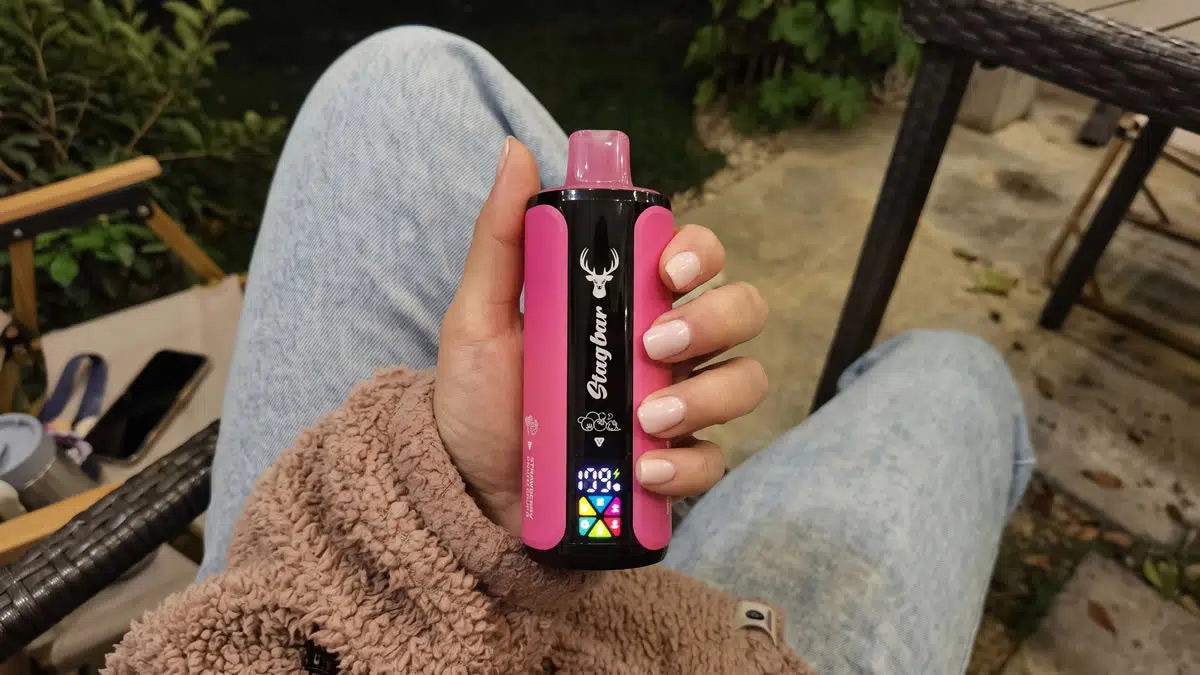
StagBar Vape 4in1 80K Puffs Disposable
The Stagbar 4-in-1 80,000 is a revolutionary high-capacity disposable featuring 4 flavors and 4 independent mesh coils in one device, delivering an industry-leading 80,000 puffs.
Prohibitive Policies in Western and Northern Europe
A growing coalition of European countries views product prohibitions as the most effective method to curb adolescent nicotine use. France and Belgium led this shift by moving to ban pre-filled, non-rechargeable disposable e-cigarettes. Regulators in both capitals based their decisions on two arguments: the products’ appeal to teenagers through low retail prices and colorful packaging, alongside the volume of hazardous electronic waste generated by discarded lithium-ion batteries.
The Netherlands took a different route by targeting liquid formulations directly. Dutch regulations restrict all e-liquid flavorings other than tobacco profiles. Dutch health officials maintain that sweet, dessert, and fruit flavor profiles act as an entry point for minors. However, domestic retailers report that severe flavor bans risk pushing adult consumers toward illicit suppliers or back toward conventional cigarettes.
In the Nordic region, governments enforce rigorous restrictions on marketing, retail display, and age verification. The prevailing model across Scandinavia treats e-cigarettes as strictly controlled nicotine-delivery devices, subjecting point-of-sale displays to concealment rules similar to combustible tobacco.
Fiscal Control Over Product Bans: Central and Southern Europe
In contrast to outright product prohibitions, markets such as Germany, Italy, and Spain maintain an approach centered on economic regulation, traceability, and market continuity.
In Germany, the sector operates under technical compliance standards accompanied by volume-based excise taxes on e-liquids. While federal politicians frequently debate flavor limits and single-use bans, the country maintains an open commercial landscape that relies on specialized vape shops and adult age verification at checkout.
Italy demonstrates the fiscal regulation model. Rather than removing product categories from store shelves, Italian authorities brought e-liquids under the supervision of the Customs and Monopolies Agency (ADM). Products carry specific tax stamps, distribution is channeled through licensed tobacconists and certified vape retailers, and online sales are subject to domestic physical pickup requirements. This system prioritizes revenue collection and supply chain transparency over total bans.
Spain applies standard European baselines while using municipal ordinances to manage public use. Regional health bodies have curbed vaping on hospital grounds, around educational centers, and across public transport networks, while national authorities restrict cross-border online sales to protect domestic distribution channels.
The 2026 Revision: Black Markets, Youth Access, and Environment
The European Commission’s pending review of the tobacco framework in 2026 has intensified regulatory debates across Brussels. European lawmakers are examining how to update directives to account for nicotine pouches, heated tobacco, and disposable vapes.
Industry analysts point out that excessive regulatory divergence among member states feeds illicit trade networks. When one country implements an outright ban on flavors or disposable hardware while a neighboring state keeps those items on store shelves, unregulated cross-border transport increases. Law enforcement agencies across the EU have reported rising numbers of non-compliant, untaxed shipments intercepted along intra-European transport routes.
Environmental policies from Brussels are also shaping the sector’s outlook. The European Union’s broader circular economy directives require manufacturers to design consumer electronics with removable, recyclable batteries. Integrated, non-rechargeable vape models run directly counter to these waste-reduction mandates.
As the European Commission works toward its updated policy drafts, market operators and consumers face an environment defined by higher excise duties, stricter traceability mandates, and the steady decline of single-use hardware in favor of refillable systems.