Hookah refers to the physical water pipe apparatus used for smoking, whereas shisha refers to the moist, flavored tobacco blend placed inside the pipe’s bowl. While casual vernacular often uses these terms interchangeably, one is the mechanical hardware and the other is the consumable fuel.
- Hardware vs. Consumable: The hookah is the multi-component pipe (base, stem, bowl, hose), while shisha is a mixture of tobacco, molasses, glycerin, and flavorings.
- Linguistic Roots: “Hookah” derives from the Hindi/Urdu word huqqa (pot or jar), whereas “shisha” comes from the Persian word shishe (glass).
- Health Evidence: According to data from the World Health Organization (WHO), a single 45-to-60-minute waterpipe session exposes users to the smoke volume of 100 to 200 combustible cigarettes.
- Charcoal Combustion: Water cools the aerosol but does not filter out toxic heavy metals, polycyclic aromatic hydrocarbons (PAHs), or carbon monoxide.
Social waterpipe smoking has expanded across global markets over recent decades, bringing regional vocabularies into mainstream culture. The terms “hookah” and “shisha” are frequently mixed up in everyday conversation, confusing consumers, regulators, and public health officials alike. Understanding the distinction between the physical device, the consumable mixture, and the documented health realities is essential for navigating this centuries-old practice.
Hookah vs. Shisha: Core Technical Distinctions
The distinction between hookah and shisha comes down to hardware versus consumable product. A hookah is an instrument designed to pass heated smoke through water before inhalation. Shisha is the prepared substance placed within the upper chamber of that instrument.
| Feature | Hookah (The Device) | Shisha (The Consumable) |
|---|---|---|
| Definition | Water pipe apparatus | Flavored, moist tobacco or herbal blend |
| Primary Materials | Glass, stainless steel, brass, silicone, clay | Tobacco leaf, molasses/honey, vegetable glycerin, flavorings |
| Function | Transports, cools, and delivers smoke via water filtration | Generates vaporized flavor, aroma, and nicotine when heated |
| Etymological Origin | Hindi/Urdu (huqqa = vessel, jar, or pot) | Persian (shishe = glass) |
| Lifespan | Multi-year operational lifespan with proper maintenance | Single-use session lasting 45 to 90 minutes per bowl |
The Hookah: Anatomy and Mechanical Operation
The waterpipe originated in the Indian subcontinent and Safavid Persia during the 16th and 17th centuries. The earliest iterations used hollowed coconut shells as water reservoirs before evolving into elaborate glass and metallic structures. Modern hookahs rely on a sealed system composed of several mechanical parts:
- The Bowl (Head): A clay, ceramic, or silicone receptacle seated at the top that holds the shisha mixture.
- The Charcoal and Heat Source: Lit charcoal (often coconut-shell-based) sits above the bowl, separated from the tobacco by perforated aluminum foil or a metallic Heat Management Device (HMD).
- The Stem (Body): A central metal pipe through which smoke travels downward from the bowl.
- The Base (Vase): The bottom chamber, typically glass, filled with water to submerge the lower end of the stem (downstem) by roughly one inch.
- The Purge Valve: A one-way check ball valve that allows users to blow stale smoke out of the base without letting outside air disrupt the vacuum.
- The Hose and Mouthpiece: A flexible silicone or leather tube connected to the base chamber that delivers the cooled smoke to the user.
When the user inhales through the hose, negative pressure pulls heated air past the charcoal, baking the moist mixture below at temperatures between 200°C and 300°C. The resulting smoke travels down the stem, bubbles through the water base, cools, and collects in the air chamber before entering the hose.
Shisha (Mu’assel): Chemical Makeup and Ingredients
Shisha—also referred to in the Arab world as mu’assel (meaning “honeyed”) or tombak—is distinctly different from dry cigarette tobacco. It is a wet, viscous blend specifically formulated for indirect convective heating rather than direct open combustion.
Commercial shisha mixtures generally contain four main elements:
- Tobacco Leaf (30% to 40%): Typically air-cured Virginia or Oriental tobacco leaves that are washed, stripped, and chopped to moderate the raw nicotine concentration (ranging from 0.05% in washed blonde leaf to over 0.5% in unwashed dark leaf).
- Molasses or Honey (50% to 60%): The primary binding agent that coats the leaf, preventing rapid burning and facilitating caramelization.
- Vegetable Glycerin (5% to 10%): A humectant that absorbs thermal energy and vaporizes into dense white clouds upon inhalation.
- Aromatics and Flavor Extracts (1% to 5%): Natural and artificial food-grade flavorings ranging from single fruits (double apple, mint, grape) to complex spice profiles.
Global Terminology: Regional Names and Etymological Origins
Waterpipe terminology splintered as the practice traveled along historical trade routes through South Asia, the Middle East, North Africa, and Europe. Today, several regional terms describe identical or closely related smoking apparatuses:
- Hookah: Dominant in the United States, Canada, India, and Pakistan. Derived from the Hindustani huqqa, British colonial trade introduced the term into the English lexicon during the 19th century.
- Shisha: The standard term in Egypt, Sudan, and across the United Kingdom. In the UK, the phrase “going for a shisha” typically describes both the physical lounge and the social activity.
- Narghile / Argileh: Common throughout the Levant (Lebanon, Syria, Jordan), Turkey, and Greece. The term originates from the Sanskrit narikela, directly referencing the coconut shells used in the earliest historical devices.
- Qalyan / Kalyan: The Persian name used in modern Iran, which was later adopted into Russian and Eastern European languages as kalyan.
- Hubble-Bubble: An archaic English colloquialism coined during the British colonial era, describing the rhythmic gurgling sound of air bubbling through the water base.
- Waterpipe: The standardized technical term used by the Centers for Disease Control and Prevention (CDC), the National Health Service (NHS), and global academic bodies to eliminate semantic ambiguity in clinical research.

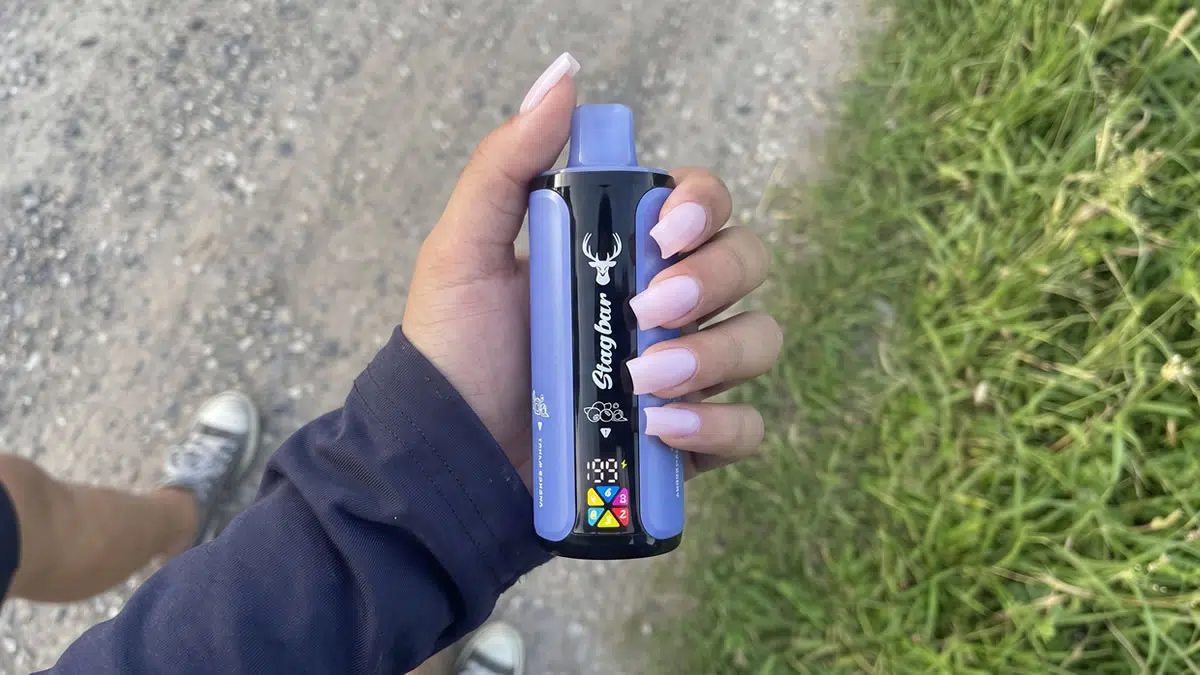
StagBar Vape 6in1 180K Puffs Disposable
The Stagbar 6-in-1 featuring a unique 6-flavor system and six independent mesh coils, this device allows users to switch between six distinct tastes in one sleek unit, delivering an unprecedented 180,000 puffs.
Health Realities: Deconstructing the Water Filtration Myth
A widespread public misconception suggests that bubbling smoke through water purifies it of harmful constituents. Toxicological analyses by major health institutions disprove this assumption.
The water chamber primarily cools and humidifies the aerosol, reducing airway irritation. However, because water does not dissolve non-polar hydrocarbons or neutralize carbon monoxide, toxic compounds pass directly through the water base into the user’s lungs.
Smoke Volume and Toxicant Exposure
A standard cigarette involves approximately 10 to 12 puffs over 5 to 7 minutes, inhaling roughly 500 to 600 milliliters of smoke. In contrast, an average 45-to-60-minute waterpipe session involves 100 to 200 puffs, exposing the user to approximately 90,000 milliliters of smoke volume.
Data published by medical researchers and tracked by the CDC Waterpipe Factsheets reveal that waterpipe emissions contain:
- Carbon Monoxide (CO): Levels are up to 5 to 10 times higher in waterpipe smoke than in cigarette smoke due to the continuous smoldering of charcoal above the bowl.
- Carcinogens and Heavy Metals: Measurable quantities of tobacco-specific nitrosamines (TSNAs), arsenic, nickel, lead, chromium, and cobalt.
- Polycyclic Aromatic Hydrocarbons (PAHs): High concentrations of carcinogenic pyrene and benzo[a]pyrene produced by the thermal breakdown of charcoal.
- Volatile Aldehydes: Formaldehyde, acrolein, and acetaldehyde generated when glycerin and molasses are heated past their decomposition thresholds.
Epidemiological studies link regular waterpipe use to increased risks of lung cancer, oral malignancies, cardiovascular disease, impaired pulmonary function, and chronic obstructive pulmonary disease (COPD).
The Reality of “Tobacco-Free” and Herbal Shisha
Herbal, fruit-pulp, or tea-leaf shisha blends are frequently marketed as safer alternatives because they lack tobacco and nicotine. However, this distinction addresses only part of the hazard profile.
When charcoal burns over an herbal bowl, the charcoal itself produces high levels of carbon monoxide, heavy metals, and particulate matter. Furthermore, heating organic plant matter, honey, and vegetable glycerin above 200°C still causes pyrolysis, releasing volatile aldehydes and fine particulate mass regardless of whether tobacco is present.
Maternal and Nursing Risks: Waterpipe Smoke and Breastfeeding
Health bodies, including the American Academy of Pediatrics (AAP) and the UK National Health Service (NHS), advise strictly against waterpipe use during pregnancy and lactation.
The exposure risks for nursing infants operate across three primary biological pathways:
- Direct Transfer via Breast Milk: Nicotine is a water-soluble, lipid-permeable molecule that concentrates in human breast milk at levels roughly double those found in maternal blood serum. It exhibits an elimination half-life of approximately 90 minutes in milk tissue. Infants metabolize nicotine poorly, which can lead to sleep disruption, colic, irritability, and altered metabolic patterns.
- Carbon Monoxide Transmission: Inhaled carbon monoxide binds to maternal hemoglobin to form carboxyhemoglobin, reducing oxygen delivery throughout the body and placing metabolic stress on the mother.
- Secondhand and Thirdhand Deposition: The prolonged nature of waterpipe sessions deposits toxic residues on skin, hair, and clothing. When holding or nursing an infant, these thirdhand smoke compounds are transferred directly to the child’s respiratory system.
Islamic Jurisprudence: Contemporary Rulings on Waterpipe Smoking
Because waterpipes did not exist during the formative years of Islamic law, modern religious rulings (fatwas) apply foundational principles of Islamic jurisprudence to contemporary medical evidence.
Historically, some scholars categorized tobacco use as makruh (disliked or discouraged) when its health impacts were not yet fully documented. However, contemporary Islamic legal bodies have overwhelmingly reclassified shisha use as haram (prohibited).
This legal consensus is grounded in two primary scriptural principles:
- Prohibition of Self-Harm: Surah Al-Baqarah (2:195) states: “And do not throw yourselves into destruction with your own hands.” When clinical science established the direct links between waterpipe smoke, tissue damage, and life-threatening illnesses, Islamic jurists concluded that using the substance violates the prohibition against damaging one’s own body.
- The Legal Maxim of Non-Harm: The Prophetic hadith recorded in Sunan Ibn Majah (2341)—“There shall be no harm and no reciprocation of harm” (la darar wa la dirar)—forbids actions that deliberately damage individual or public health.
Prominent institutions—including Egypt’s Al-Azhar House of Fatwa, the Saudi Permanent Committee for Scholarly Research, and the Malaysian National Fatwa Council—have issued official declarations stating that smoking shisha, whether with tobacco or herbal mixtures, is impermissible under Islamic law due to verified toxicological harm and the wasteful expenditure of personal wealth.
Frequently Asked Questions
-
Is hookah smoke safer than cigarette smoke?
No. Research from the World Health Organization shows that an individual waterpipe session exposes the smoker to up to 100 to 200 times the volume of smoke produced by a single cigarette, delivering high concentrations of carbon monoxide, heavy metals, and carcinogenic hydrocarbons.
-
Does the water in a hookah remove nicotine?
The water traps only a minor fraction of nicotine. The vast majority passes through the water chamber and is absorbed through the user’s lungs, leading to chemical dependency and cardiovascular stimulation.
-
Why is it called “shisha” in some places and “hookah” in others?
The vocabulary reflects trade and language history. “Hookah” comes from the Hindi/Urdu term for a jar or vessel, popularized via British trade with India. “Shisha” comes from the Persian word for glass, spreading through Egypt and the Levant to denote the glass water basin before becoming a blanket term for the flavored tobacco.
-
Is herbal, tobacco-free shisha completely safe?
No. While herbal blends do not contain nicotine, burning charcoal on top of the bowl still generates dangerous levels of carbon monoxide, polycyclic aromatic hydrocarbons, and fine particulate matter that enter the lungs upon inhalation.
-
Can you smoke hookah while breastfeeding?
Health authorities strongly advise against smoking hookah while breastfeeding. Nicotine passes into breast milk at twice the concentration found in maternal blood, and combustion products from charcoal generate toxic secondhand and thirdhand smoke risks for the infant.
Disclaimer: This article is provided for educational and informational purposes only and does not constitute medical, legal, or religious advice. The health-related data cited is based on published findings from international public health organizations, including the World Health Organization and the Centers for Disease Control and Prevention. Individuals seeking tobacco cessation resources should consult a qualified physician or their local public health service.


