For years, sensationalized headlines have warned the public about the extreme toxicity of nicotine. Claims that “nicotine is more poisonous than cyanide” or that “a single drop of e-liquid will kill a child” are frequently circulated. These statements understandably spark deep anxiety among adult smokers looking to switch to vaping, as well as current vapers concerned about their daily intake.
To separate fact from fiction, we must analyze the actual science of nicotine toxicity, evaluate the real-world risks of vaping, and understand how to recognize and treat the symptoms of consuming too much nicotine.
Shattering the Myth: What is the Real Lethal Dose of Nicotine?
For over a century, medical textbooks, public health campaigns, and regulatory bodies laid down a strict warning: 30 to 60 milligrams of nicotine is enough to kill an adult human. To put this into the context of modern vaping, this would mean that drinking just 4 mL of a standard 12 mg/mL e-liquid could be fatal. However, this widely cited figure has been thoroughly debunked by modern science.
In 2013, Dr. Bernd Mayer, a professor of pharmacology and toxicology at the Karl-Franzens University of Graz, published a groundbreaking study in the peer-reviewed journal Archives of Toxicology. Mayer investigated the origins of the 30–60 mg limit and traced it back to a German textbook from 1906 written by toxicologist Rudolf Kobert. Kobert had simply repeated self-experiments conducted in the mid-19th century by researchers who reported seizures and loss of consciousness after consuming tiny, poorly measured amounts of pure nicotine.
Mayer’s research analyzed documented cases of survival after massive nicotine ingestion, as well as post-mortem blood concentrations in actual suicide cases. His findings revealed that:
- The lowest blood plasma concentration of nicotine recorded in a fatal poisoning case was 4 mg/L, which corresponds to an ingested dose of at least 500 to 1,000 mg of pure nicotine.
- Individuals who ingested several hundred milligrams of nicotine frequently survived with only moderate symptoms, primarily because nicotine rapidly triggers the body’s emetic reflex (vomiting), which expels the toxin before it can be fully absorbed into the bloodstream.
Consequently, Mayer officially revised the estimated lethal oral dose (LD50) of nicotine for humans to 500 to 1,000 mg. This means nicotine is far less toxic than historically claimed, and certainly not “more poisonous than cyanide,” as some sensationalist reports suggest.
Can You Actually Vape Your Way to a Nicotine Overdose?
To understand why a fatal overdose from inhaling vapor is virtually impossible, we must look at the pharmacokinetics of vaping. The biological half-life of nicotine in the human body is approximately two hours. This means your liver processes and eliminates nicotine rapidly, requiring an incredibly high rate of continuous intake to build up toxic levels.
Let us calculate the physical requirements for a lethal vape dose based on Mayer’s conservative 500 mg threshold:
- If you are using a standard 12 mg/mL e-liquid, you would need to vaporize and fully absorb 41.6 mL of e-juice within a two-hour window.
- If you are using a stronger 18 mg/mL e-liquid, you would still need to vaporize and absorb nearly 28 mL in that same brief timeframe.
Given that the average vaper consumes between 2 to 5 mL of e-liquid over an entire day, vaporizing 30 to 40 mL in two hours is physically impossible. The throat hit, lung capacity limits, and battery capabilities of consumer devices make this scenario a logistical absurdity.
What the Blood Plasma Studies Show
In a landmark 2014 study, Dr. Konstantinos Farsalinos and his research team evaluated nicotine absorption rates in experienced vapers. Using an 18 mg/mL e-liquid on a standard device, participants took 10 puffs over five minutes, followed by an hour of ad-libitum (free) vaping.
The study revealed the following blood plasma nicotine concentrations:
- After 5 minutes (10 puffs): Average plasma levels reached 8.1 ng/mL (nanograms per milliliter).
- After 65 minutes of continuous use: Average plasma levels rose to 24.1 ng/mL, with the absolute highest individual recording at 48.1 ng/mL.
To put this in perspective, the minimum lethal blood plasma concentration identified in Mayer’s toxicology review is 4,000 ng/mL. The vaper with the highest recorded absorption in Farsalinos’ study was still 83 times below the minimum lethal threshold. Even with modern, high-powered sub-ohm mods or high-concentration nicotine salts (e.g., 50 mg/mL), a user would experience severe, debilitating nausea long before their blood plasma levels could climb to dangerous heights.
“Nic Sick” vs. Acute Poisoning: Symptoms to Watch For
While a fatal overdose from vaping is highly improbable, consuming too much nicotine in a short period is relatively common. This physiological state is colloquially known as being “nic sick.”
Nicotine is a biphasic substance. At low doses, it acts as a stimulant, accelerating central nervous system activity. At extremely high doses, it acts as a depressant, blocking neuromuscular transmission. Because of this biphasic nature, nicotine poisoning presents in two distinct clinical phases, as outlined by the Cleveland Clinic.
| Phase & Timing | Common Symptoms | Severity & Action Required |
|---|---|---|
| Early Phase (15 mins to 1 hour post-exposure) | Nausea and vomitingDizziness or lightheadednessHeadaches and mild jittersIncreased salivation (drooling)Rapid heart rate and elevated blood pressure | Mild to Moderate: Stop vaping immediately, sit down, and drink water. Symptoms usually fade within an hour. |
| Late Phase (30 mins to 4 hours post-exposure) | Stomach cramps and diarrheaExtreme fatigue and muscle weaknessSlow heart rate (bradycardia)Low blood pressure (hypotension)Confusion, anxiety, or pale skin | Moderate to Severe: Monitor closely. If symptoms worsen or do not subside, seek medical advice. |
| Severe Toxicity (Acute high-dose ingestion) | Seizures or muscle tremorsShallow breathing or respiratory failureArrhythmia (abnormal heart rhythm)Coma | Critical Emergency: Call emergency services (999/911) immediately. Requires urgent hospital treatment. |
For vapers, the onset of early-phase symptoms – specifically nausea and dizziness – acts as a natural safety valve. The moment these symptoms begin, the user’s desire to continue vaping drops to zero, effectively preventing them from reaching the dangerous late-phase symptoms.

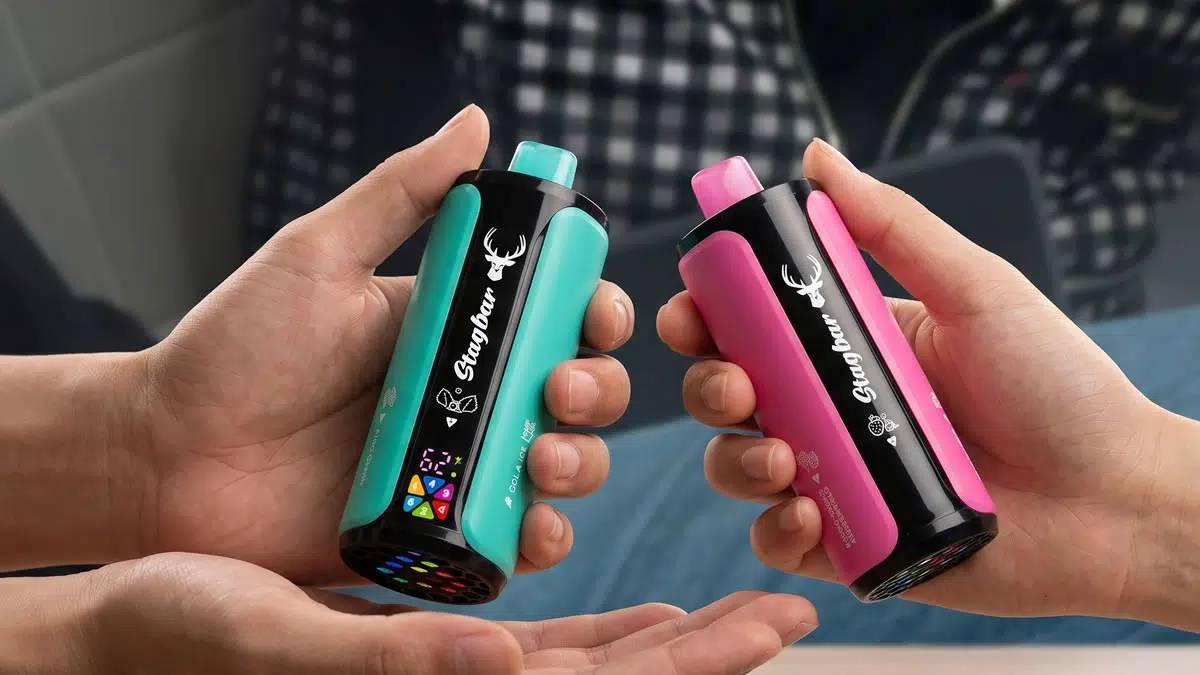
StagBar Vape 6in1 180K Puffs Disposable
The Stagbar 6-in-1 featuring a unique 6-flavor system and six independent mesh coils, this device allows users to switch between six distinct tastes in one sleek unit, delivering an unprecedented 180,000 puffs.
Real-World Risks: Ingestion, Skin Absorption, and DIY Mixing
While inhalation carries minimal risk of acute poisoning, other forms of exposure to liquid nicotine present genuine hazards. These risks are amplified when dealing with concentrated e-liquids or raw nicotine bases used for DIY mixing.
1. Accidental Ingestion (The Child and Pet Hazard)
The primary clinical concern regarding nicotine poisoning is accidental ingestion by toddlers and domestic pets. Because of their low body weight, a dose that would merely cause mild nausea in an adult can be fatal to a child or a small dog.
For example, a toddler weighing 14 kg (approximately 30 lbs) has a toxic threshold of roughly 90 mg of nicotine. If a parent leaves a bottle of 18 mg/mL e-liquid uncapped, a child would only need to swallow 5 mL (one teaspoon) of the liquid to ingest a potentially lethal dose. The sweet, dessert-like flavorings used in e-liquids make them highly appealing to children, making secure, child-proof storage an absolute necessity.
2. Dermal Absorption and “Green Tobacco Sickness”
Nicotine is highly transdermally active, which is why nicotine patches are an effective smoking cessation tool. Tobacco harvesters frequently suffer from “Green Tobacco Sickness” (GTS), a form of nicotine poisoning caused by absorbing dew-laden nicotine from tobacco leaves through their skin.
If you spill commercial e-liquid on your skin, the risk of poisoning is low but present. A study on skin absorption rates showed that a low-strength e-liquid (8 mg/mL) absorbs at a rate of just 0.00482 mg per square centimeter per hour. If you spill a small amount on your hand and wash it off within a few minutes, virtually no nicotine will enter your system. However, if high-strength liquid is left on the skin over several hours, systemic absorption can occur.
3. The Extreme Danger of DIY Nicotine Bases
The risk profile changes dramatically when handling high-strength nicotine bases used for DIY e-liquid mixing. In regions where it is legal, DIY enthusiasts often handle nicotine bases with concentrations of 72 mg/mL, 100 mg/mL, or even higher.
At these concentrations, the safety margins disappear:
- A single spill of 100 mg/mL nicotine base on unprotected skin can rapidly deliver a toxic dose if not washed off immediately with cold water.
- A minor mathematical miscalculation during mixing can result in an e-liquid that is far too strong, leading to immediate “nic sickness” upon the first puff.
- Ingesting even a fraction of a teaspoon of this concentrated base can be fatal to an adult.
Vaping vs. Smoking: Keeping Nicotine in Perspective
To maintain an objective view of nicotine, it is essential to separate the chemical itself from the delivery mechanism. Public health organizations, including the World Health Organization (WHO), recognize that while nicotine is the primary addictive agent in tobacco, it is not the direct cause of tobacco-related cancers, cardiovascular disease, or lung rot.
Traditional cigarette smoke contains over 7,000 chemicals, including at least 70 known carcinogens such as arsenic, formaldehyde, benzene, and polonium-210. It also produces carbon monoxide, which binds to red blood cells and starves the body of oxygen.
In contrast, high-quality, regulated e-liquids contain only four basic ingredients:
- Propylene Glycol (PG): A thin, food-grade liquid used to carry flavor and provide a throat hit.
- Vegetable Glycerin (VG): A thick, sweet liquid derived from plant oils used to produce vapor clouds.
- Food-Grade Flavorings: Standard flavor compounds tested for inhalation safety.
- Nicotine: Purified pharmaceutical-grade nicotine.
Furthermore, concerns regarding severe lung injuries such as EVALI (E-cigarette or Vaping Product Use-Associated Lung Injury) have been thoroughly investigated by the Centers for Disease Control and Prevention (CDC). The CDC confirmed that EVALI was not caused by standard nicotine vaping, but rather by Vitamin E Acetate, a thickening agent exclusively used in illicit, black-market THC cartridges.

StagBar Vape 4in1 80K Puffs Disposable
The Stagbar 4-in-1 80,000 is a revolutionary high-capacity disposable featuring 4 flavors and 4 independent mesh coils in one device, delivering an industry-leading 80,000 puffs.
Emergency Protocol: What to Do If Things Go Wrong
If you or someone near you exhibits signs of nicotine overexposure, quick and calm action can prevent the situation from escalating.
If You Have Vaped Too Much (Mild Overexposure)
- Stop Vaping Immediately: Put the device away and do not attempt to “power through” the nausea.
- Hydrate: Drink a large glass of cool water to help flush your system.
- Get Fresh Air: Step outside or open a window to alleviate dizziness.
- Rest: Sit or lie down until the symptoms pass. Because of nicotine’s short half-life, you will likely feel completely normal within 30 to 60 minutes.
If E-Liquid is Swallowed (Acute Ingestion)
- Assess the Victim: If the victim is an adult and swallowed a tiny drop of low-strength e-liquid, they may experience mild nausea but will likely be fine.
- Act Immediately for Children/Pets: If a child or pet has swallowed any amount of e-liquid, or if an adult has swallowed high-strength liquid, call emergency services (e.g., 999 in the UK, 911 in the US) or your local Poison Control Center immediately.
- Do Not Induce Vomiting: Unless explicitly instructed by a medical professional, do not force the victim to vomit, as this can lead to aspiration of the liquid into the lungs.
- Gather Information: Have the e-liquid bottle ready so you can tell the emergency responders the exact nicotine concentration (mg/mL) and volume consumed.
If High-Strength Nicotine is Spilled on the Skin
- Strip: Immediately remove any clothing that has been saturated with the liquid.
- Wash: Flush the affected skin area thoroughly with cold, soapy water. Avoid hot water, as it dilates blood vessels and can accelerate dermal absorption.
- Ventilate: If a large spill occurs indoors, open windows to disperse any fumes.
Frequently Asked Questions (FAQs)
-
Can you get nicotine poisoning from second-hand vape clouds?
No. Studies measuring nicotine levels in indoor air where vaping occurs show that the amount of nicotine exhaled by vapers is extremely low. A non-vaper sitting in a room filled with second-hand vapor would absorb virtually unmeasurable amounts of nicotine, making second-hand nicotine poisoning scientifically impossible.
-
How long does “nic sickness” last?
For mild cases (nausea, lightheadedness from vaping too much), symptoms typically resolve within 1 to 2 hours as the liver metabolizes the nicotine. For severe cases involving ingestion or high dermal absorption, symptoms can persist for 18 to 24 hours and require hospital monitoring.
-
Why does vaping make me feel dizzy or lightheaded?
Nicotine is a vasoconstrictor, meaning it temporarily narrows your blood vessels and increases your heart rate. This can cause a brief drop in oxygen delivery to the brain, resulting in a “buzz” or lightheadedness. If this feeling is intense or unpleasant, it is a sign that your nicotine strength is too high or you are vaping too quickly. Read more: Why Do I Get a Headache When I Vape?
-
Is synthetic nicotine safer or more toxic than tobacco-derived nicotine?
Chemically speaking, pure synthetic nicotine (such as sub-types like clean S-nicotine) is identical to tobacco-derived nicotine. It carries the exact same toxicity profile, meaning it is neither more nor less toxic. The primary benefit of synthetic nicotine is the absence of tobacco-specific impurities and a cleaner taste profile.
-
Can pets get nicotine poisoning from vapor or spilled e-liquid?
Yes, pets are highly sensitive to nicotine. Dogs and cats have much smaller body masses than humans, and dogs are notorious for chewing on plastic e-liquid bottles or disposable vapes. Keep all vaping equipment, refills, and disposables locked away in pet-inaccessible cabinets.
Disclaimer: The information provided in this article is for educational and informational purposes only and should not be construed as professional medical advice, diagnosis, or treatment. Always seek the advice of your physician or other qualified health provider with any questions you may have regarding a medical condition. If you suspect someone is suffering from acute nicotine poisoning, contact emergency services immediately.


