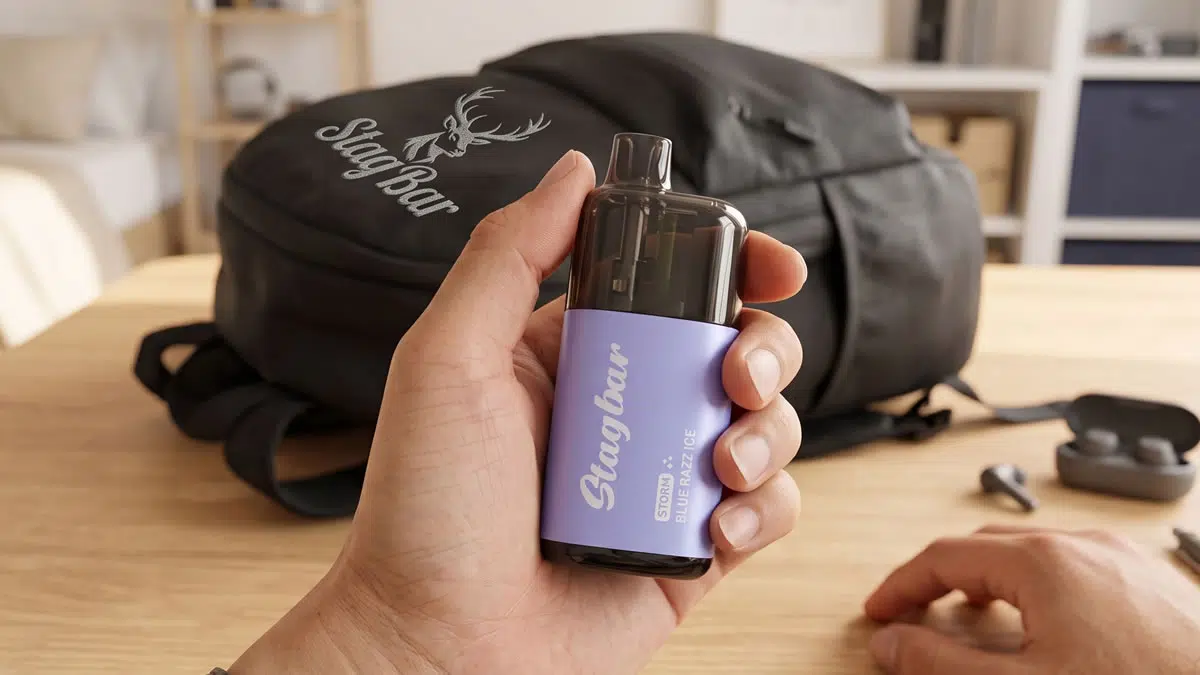
Vaping is legal in Canada for adults who meet provincial age requirements, but it is strictly regulated under federal, provincial, and municipal frameworks. Federal law caps nicotine concentration at 20 mg/mL, while individual provinces govern legal purchase ages (ranging from 18 to 21), retail flavour bans, and public consumption zones.
- Federal Nicotine Cap: Under Health Canada regulations, e-liquids cannot exceed 20 mg/mL (2%) nicotine strength.
- Legal Age Limits: The legal purchase age is 18 in Alberta, Manitoba, and Quebec; 21 in Prince Edward Island; and 19 across all remaining provinces and territories.
- Flavour Bans: Six jurisdictions (Quebec, Nova Scotia, New Brunswick, PEI, Northwest Territories, and Nunavut) prohibit all flavours other than tobacco.
- Air Travel Safety: Transport Canada mandates that all vape hardware and lithium-ion batteries must travel in carry-on baggage only.
Vaping in Canada operates under a multi-tiered regulatory system. While the federal government sets baseline standards for product safety, chemical composition, and marketing, provinces and territories enforce specific rules regarding legal age, product availability, excise taxation, and designated consumption areas.
Whether residing in Canada or entering as a traveler, understanding this regulatory framework ensures adherence to federal statutes, provincial tobacco control acts, and aviation security protocols.
Federal Vaping Regulations Under Health Canada
The foundation of Canadian vape regulation rests on the Tobacco and Vaping Products Act (TVPA). Enacted by Parliament, the TVPA establishes national standards aimed at preventing youth nicotine uptake while maintaining access for adult smokers seeking alternatives to combustible cigarettes.
The 20 mg/mL Nicotine Concentration Ceiling
In 2021, Health Canada enacted the Nicotine Concentration in Vaping Products Regulations. This statute establishes a hard ceiling of 20 mg/mL (2%) on all nicotine-containing vaping substances manufactured, imported, or sold in Canada. High-strength e-liquids (such as 50 mg/mL formulations) are illegal nationwide across all retail and import channels.
Packaging, Labelling, and Child Safety Mandates
Under the Vaping Products Labelling and Packaging Regulations (VPLPR), manufacturers must meet rigid consumer protection standards before products enter distribution:
- Health Warnings: Packaging must display standardized, bilingual (English and French) health warnings detailing nicotine addiction risks.
- Chemical Disclosure: Product containers must declare exact nicotine concentrations and list all formulation ingredients in both official languages.
- Child-Resistant Packaging: Refillable tanks, pods, and bottles containing liquid with more than 0.1 mg of nicotine must utilize certified child-resistant containers to prevent accidental poisoning.
Promotion and Marketing Restrictions
The Vaping Products Promotion Regulations (VPPR) prohibit advertising that targets youth or associates vaping with lifestyle appeals. Product promotions cannot feature testimonials, celebrity endorsements, depictions of persons or characters, or health-benefit claims. Flavour descriptors that appeal directly to minors are also barred from packaging and point-of-sale displays.
Provincial and Territorial Vaping Rules Breakdown
Provinces and territories exercise constitutional authority over retail sales channels, local taxation, and public health restrictions. Consequently, consumer options change when crossing provincial borders.
| Province / Territory | Legal Age | Flavour Restrictions | Public Use Buffer Zones |
|---|---|---|---|
| Alberta | 18+ | Federally aligned (All legal flavours permitted) | 5m from doorways, windows, and air intakes |
| British Columbia | 19+ | Restricted (Flavours limited to adult-only vape shops) | 6m from doorways, windows, and air intakes |
| Manitoba | 18+ | Federally aligned (All legal flavours permitted) | Prohibited indoors, patios, and near child zones |
| New Brunswick | 19+ | Tobacco only (Complete flavour ban) | Prohibited in indoor public spaces and work vehicles |
| Newfoundland & Labrador | 19+ | Tobacco only (Complete flavour ban) | Prohibited in indoor public spaces and workplaces |
| Northwest Territories | 19+ | Tobacco only (Complete flavour ban) | Prohibited in public buildings and around entrances |
| Nova Scotia | 19+ | Tobacco only (Complete flavour ban) | 4m from air intakes; banned in cars with minors under 19 |
| Nunavut | 19+ | Tobacco only (Complete flavour ban) | Prohibited in public areas; online retail shipping banned |
| Ontario | 19+ | Restricted (Flavours limited to specialty vape stores) | 9m from hospital entrances, schools, and playgrounds |
| Prince Edward Island | 21+ | Tobacco only (Complete flavour ban) | Tobacconist sales only; banned in vehicles with minors |
| Quebec | 18+ | Tobacco only (Complete flavour ban; max 2mL pods) | 9m from doors and windows of public buildings |
| Saskatchewan | 19+ | Restricted (Flavours limited to specialty vape stores) | 3m to 5m buffer zones; banned in cars with minors under 16 |
| Yukon | 19+ | Federally aligned (All legal flavours permitted) | 5m from doorways, windows, and air intakes |
Provinces with Full Flavour Bans
Six jurisdictions have eliminated non-tobacco e-liquid flavours from retail shelves entirely. Quebec’s Tobacco Control Act implemented a ban on all characterising flavours other than tobacco in October 2023, while also restricting e-liquid refill bottles to 30 mL and cartridge volumes to 2 mL. Nova Scotia, New Brunswick, Prince Edward Island, the Northwest Territories, and Nunavut enforce identical tobacco-only requirements for physical and direct-to-consumer online sales.
Provinces with Specialty Retail Channel Restrictions
Ontario, British Columbia, and Saskatchewan permit fruit, dessert, and mint flavours under strict distribution channels. In Ontario, under the Smoke-Free Ontario Act, flavoured products can only be displayed and sold within licensed Specialty Vape Stores where minors are legally barred from entry and at least 85% of total sales derive from vaping hardware and liquids. General convenience stores and gas stations in these provinces are restricted to tobacco and limited mint/menthol products.
Age Limits: The 18, 19, and 21 Divide
While federal baseline legislation allows sales to individuals aged 18, provincial governments hold jurisdiction over the age of majority for controlled substances:
- Age 18: Alberta, Manitoba, and Quebec.
- Age 19: British Columbia, Ontario, Saskatchewan, New Brunswick, Nova Scotia, Newfoundland and Labrador, Yukon, Northwest Territories, and Nunavut.
- Age 21: Prince Edward Island maintains the highest purchasing age threshold in the country under the Prince Edward Island Vaping Laws.

StagBar Vape 4in1 80K Puffs Disposable
The Stagbar 4-in-1 80,000 is a revolutionary high-capacity disposable featuring 4 flavors and 4 independent mesh coils in one device, delivering an industry-leading 80,000 puffs.
Federal and Provincial Excise Duty System
The Canadian government levies an excise tax on all vaping substances containing liquid, solid, or gel components. Calculated based on liquid volume rather than nicotine concentration or retail price, the standard federal duty rate applies as follows:
- First 10 mL of liquid: $1.12 per 2 mL (or fraction thereof).
- Quantities exceeding 10 mL: $1.12 per 5 mL (or fraction thereof).
Several provinces—including Ontario, Quebec, Nova Scotia, New Brunswick, Prince Edward Island, Alberta, Manitoba, Nunavut, and the Northwest Territories—participate in a coordinated federal-provincial vaping duty framework. In these jurisdictions, an equivalent provincial tax matches the federal rate, doubling the excise duty applied to bottles, pre-filled pods, and disposable devices. Products distributed within participating regions must bear a jurisdiction-specific excise stamp on the packaging to verify that regional tax obligations have been cleared.
Air Travel Regulations: Flying with Vapes in Canada
Air transport involving vaping hardware and e-liquids requires strict adherence to security rules managed by Transport Canada and the Canadian Air Transport Security Authority (CATSA).
- Carry-On Baggage Only for Devices: Electronic smoking devices, mods, and loose lithium-ion batteries are strictly forbidden in checked luggage due to fire hazards. They must remain in carry-on baggage or on your person throughout the flight.
- The 100 mL Liquids Rule: E-liquids in carry-on bags are subject to standard aviation liquid restrictions. Individual containers must not exceed 100 mL (3.4 oz) and must fit within a single clear, closed 1-litre plastic bag. Larger unopened e-liquid bottles can be packed in checked luggage.
- Prohibition on Use and Recharging: Using a vape device aboard an aircraft, inside airport lavatories, or within passenger terminal buildings outside designated smoking areas is an offence under the Canadian Aviation Regulations. Recharging devices on aircraft power outlets is also prohibited.
- Cabin Pressure Precautions: Aircraft cabin depressurization can cause open-tank systems and pre-filled pods to leak. Emptying tanks or storing individual pods in sealed bags before boarding prevents fluid leakage into luggage.
Public Vaping Restrictions and Municipal Bylaws
Public consumption laws in Canada align the treatment of vaporizers with combustible tobacco products. Provincial clean indoor air acts ban vaping inside enclosed public spaces, workplace environments, restaurants, bars, and public transportation infrastructure.
Outdoor buffer zones vary across provincial and municipal statutes:
- Entrances and Windows: Provincial laws enforce buffer distances ranging from 3 to 9 metres around public doors, operable windows, and building air intakes to prevent vapour drift into commercial facilities.
- Vulnerable Outdoor Zones: Public playgrounds, sports fields, splash pads, outdoor recreational rinks, and school grounds are completely smoke- and vape-free zones across Canadian jurisdictions.
- Healthcare Properties: Alberta Health Services, Vancouver Coastal Health, and other regional health networks enforce property-wide bans extending to exterior parking areas, pathways, and outpatient spaces.
- Vehicles Carrying Minors: Vaping inside a private vehicle when children are present (under age 16 in Saskatchewan; under age 19 in Nova Scotia and PEI) is an infraction subject to provincial highway safety fines.

StagBar Vape 6in1 180K Puffs Disposable
The Stagbar 6-in-1 featuring a unique 6-flavor system and six independent mesh coils, this device allows users to switch between six distinct tastes in one sleek unit, delivering an unprecedented 180,000 puffs.
Frequently Asked Questions
-
Can visitors bring vapes into Canada from other countries?
Yes. International travelers who meet the legal age requirement of the province they enter may bring vaping devices and e-liquids into Canada for personal use. Products must clear Canada Border Services Agency (CBSA) inspection and adhere to the 20 mg/mL federal nicotine cap. Shipments or personal imports exceeding standard duty-free limits are subject to customs tariffs and excise duties.
-
Can I vape inside my Canadian apartment or hotel room?
Provincial laws permit vaping in private residences, but property owners, condominium boards, and landlords maintain the legal authority to enforce smoke-free property clauses in rental agreements or strata bylaws. In hotels, vaping is restricted unless you are staying in a specifically designated smoking/vaping-friendly room.
-
Are disposable vapes legal across Canada?
Disposable vapes are legal federally provided they do not exceed 20 mg/mL nicotine concentration and contain approved child-resistant hardware mechanisms. However, in provinces with flavour bans (Quebec, Nova Scotia, New Brunswick, PEI, Northwest Territories, Nunavut), disposable devices are limited exclusively to tobacco flavour.
-
What happens if you are caught vaping on a Canadian flight?
Vaping on an aircraft is a federal violation under the Canadian Aviation Regulations. Passengers caught activating devices or tampering with lavatory smoke detectors face security diversion, fines up to $5,000 from Transport Canada, and potential airline blacklisting.
-
Can e-liquids with zero nicotine be sold in banned flavours?
In jurisdictions with total flavour bans (such as Quebec and Nova Scotia), restrictions apply to all vaping substances regardless of whether nicotine is present. Flavoured non-nicotine liquids, flavour enhancers, and boosters cannot be legally sold for vaping use in those provinces.
Disclaimer: This guide is for educational and informational purposes only and does not constitute formal legal advice. Vaping regulations, excise tax schedules, and municipal bylaws in Canada are subject to regular legislative amendments. Consult official government publications from Health Canada or provincial health ministries to confirm current legal requirements before purchasing, traveling with, or consuming vaping products.


