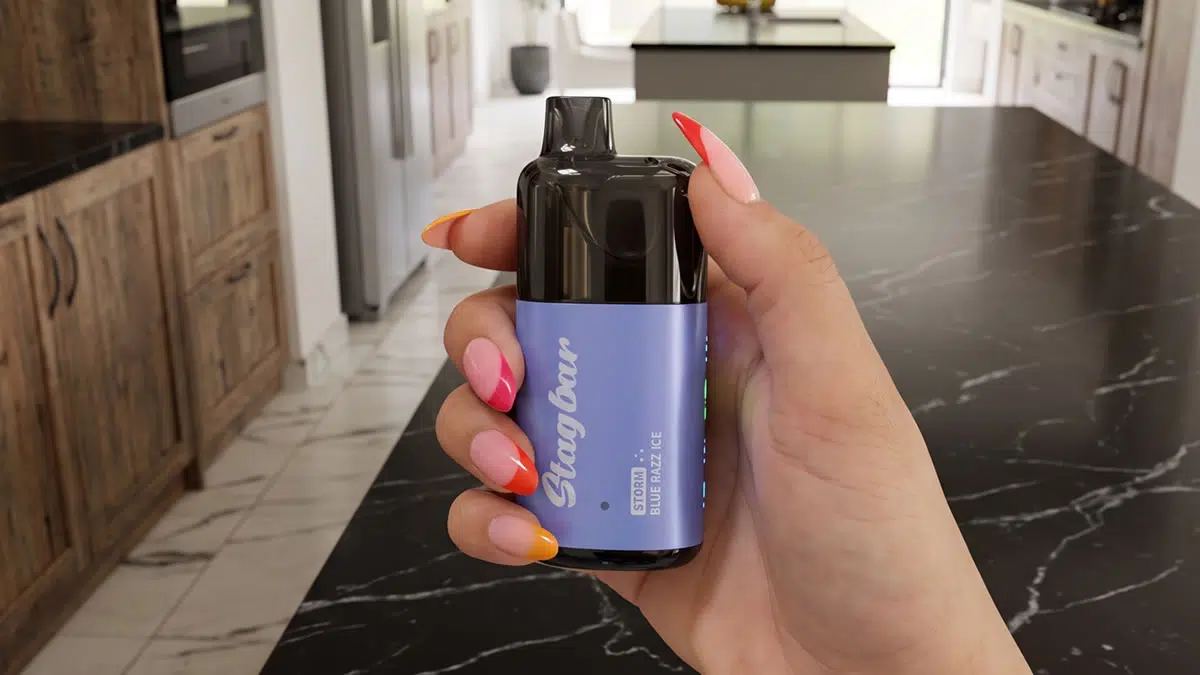
Using a personal vape is legal in Turkey, but selling, importing commercially, and manufacturing e-cigarettes is entirely banned. Travelers can bring a strictly limited personal allowance across the border, provided devices are packed in carry-on baggage and used only where cigarette smoking is permitted.
- Import vs. Personal Use: Commercial trade is illegal under Presidential Decree No. 2149, but personal traveler exemptions exist under customs rules.
- Strict Entry Limits: Adult travelers may bring one active device plus either 30ml of e-liquid, three disposable vapes, or 200 heated tobacco sticks.
- Public Restrictions: Vaping indoors or on public transit carries fines under Law No. 4207, mirroring standard tobacco bans.
- Zero Drug Tolerance: Bringing CBD or THC vape cartridges into Turkey carries prison sentences ranging from 4 to 24 years.
Travelers heading to Turkey face a unique regulatory environment: personal vaping is legal, yet commercial sales and retail shops are completely prohibited. Under national tobacco control legislation, you will not find licensed vape shops in Istanbul, Antalya, or coastal resorts. Visitors must bring their own supplies from home while strictly adhering to customs limits.
Navigating Turkish borders and local ordinances requires clear knowledge of import caps, smoke-free areas, and airline security protocols. This guide outlines the legal statutes, customs allowances, public use restrictions, and packing requirements for visiting Turkey with an e-cigarette.
The Legal Framework: Personal Possession vs. Commercial Ban
The regulatory framework governing electronic cigarettes in Turkey is split between trade prohibitions and consumer usage laws. While individual possession and personal consumption are permitted, commercial operations are illegal across the country.
On February 25, 2020, the Turkish government enacted Presidential Decision No. 2149, which banned the importation of all electronic cigarettes, electronic hookahs, parts, spare components, and e-liquids (with or without nicotine). Because the state has never granted domestic production licenses for vape hardware or liquids, the import ban eliminated all legal wholesale supply lines. Consequently, legal retail vape shops do not exist in Turkey.
Despite the absence of retail sales, personal use by adults remains lawful. Under Turkish constitutional law, penalties require an explicit statutory basis. Because no Turkish law classifies the act of personal vaping as a criminal offense, travelers and residents can operate devices in permitted outdoor areas without fear of arrest.
Public usage is governed by Law No. 4207 on the Prevention and Control of Hazards of Tobacco Products. In 2013, an amendment established that any product imitating tobacco – regardless of nicotine content – is legally classified alongside conventional cigarettes. This classification subjects vaping to all national smoke-free ordinances.
Turkish Customs Allowances: What Can You Legally Bring?
The Turkish Ministry of Trade regulates passenger allowances under specific administrative directives rather than general market rules. Circular 2020/7, titled “Entry and Transit of Electronic Cigarettes and Similar Goods Carried by Passengers,” carved out an exemption from the import ban specifically for personal traveler luggage.
Under these regulations, passengers aged 18 and older may bring equipment solely for their own consumption during their stay. The rules stipulate that incoming passengers may bring one electronic device that they are actively using, along with one selected category of consumables.
On September 19, 2024, the Ministry issued Circular 2024/18, which amended the personal allowance limits. Travelers should be aware that older travel guides citing a 10-disposable limit are out of date.
| Category | Official Allowance (Circular 2024/18) | Regulatory Notes |
|---|---|---|
| Hardware Device | 1 active device | Must be an active, opened unit for personal use. |
| Refill Liquids / Cartridges | Up to 30ml total | Applies to pre-filled pods or e-liquid bottles combined. |
| Disposable Vapes | Up to 3 units | Reduced from 10 units on September 19, 2024. |
| Heated Tobacco Units | Up to 200 sticks | Applies to products like HEETS, Terea, or Neostiks. |
| Minimum Age | 18 years old | Required age to clear items through Turkish customs. |
The allowances for e-liquids, disposables, and heated tobacco sticks are mutually exclusive. Under the text of the circular, visitors must choose one of the three options rather than combining maximums from each category.
Customs Allowance vs. Airport Liquid Rules
Travelers often confuse Turkish customs allowances with aviation security screening rules. Airport security enforces a 100ml container volume cap for hand luggage liquids inside a clear plastic bag. However, Turkish customs enforces a strict 30ml total import ceiling on e-liquid per passenger. While your airline may permit multiple 100ml bottles in transit, entering Turkish territory with more than 30ml violates national customs quotas.
Procedures for Exceeding Allowances
If border officials at ports of entry – such as Istanbul (IST), Sabiha Gökçen (SAW), or Antalya (AYT) – discover items exceeding the personal allowance, the excess goods are not immediately subject to criminal fines. According to customs directives, surplus items are placed in a bonded passenger luggage warehouse. Travelers are issued documentation to reclaim their property when departing Turkey. Unclaimed goods are eventually slated for destruction.
Criminal penalties apply only when individuals transport commercial volumes outside the regular customs process. In November 2021, Turkey amended its Anti-Smuggling Law to explicitly name electronic cigarettes, establishing prison sentences of one to five years for commercial smuggling operations.

StagBar Vape 4in1 80K Puffs Disposable
The Stagbar 4-in-1 80,000 is a revolutionary high-capacity disposable featuring 4 flavors and 4 independent mesh coils in one device, delivering an industry-leading 80,000 puffs.
Where Can You Vape in Turkey? Rules and Restrictions
Because Law No. 4207 classifies e-cigarettes as tobacco analogues, public use is governed by clean air laws across the country. Knowing where you can and cannot use a device helps prevent confrontations with business operators or municipal authorities.
Using an e-cigarette is permitted in open-air public environments. You can legally vape on public streets, coastal walking paths, public beaches, and uncovered outdoor spaces. Outside major resort regions like Marmaris, Bodrum, and Fethiye, outdoor use is widely accepted.
Vaping is prohibited in the following areas:
- All indoor public buildings, offices, and retail centers.
- Restaurants, cafes, and bars, including enclosed outdoor patio areas.
- Public transport networks, including buses, trams, the Istanbul Metro, and marine ferries.
- Airport terminals outside designated smoking spaces.
- Educational facilities, healthcare complexes, and outdoor sports stadiums.
Enclosed dining spaces are defined broadly under Turkish health codes; outdoor terraces that feature retractable awnings, plastic sheeting, or covered roofs are legally treated as indoor spaces. Using an e-cigarette in these settings carries an administrative infraction under the Misdemeanor Law. The statutory fine for smoking or vaping in prohibited public spaces is updated annually by the Ministry of Agriculture and Forestry.
Cultural context should also guide public behavior. While beach destinations and metropolitan districts are accustomed to tourists, vaping directly in front of mosques, religious monuments, or inside conservative residential neighborhoods is viewed as disrespectful and can attract local complaints.
Airport Regulations and Flying with Vapes
Aviation safety organizations, including the International Civil Aviation Organization (ICAO), maintain strict international protocols regarding e-cigarettes and lithium-ion batteries. These rules are enforced by carriers operating to and within Turkey, such as Turkish Airlines, Pegasus, and international operators.
All vape hardware, mod batteries, and disposable devices must be packed in your carry-on hand luggage. They are banned from checked baggage due to the risk of battery thermal runaway in the cargo hold. Devices should be powered off entirely to prevent accidental firing, and spare batteries must be carried in dedicated plastic cases with insulated terminals.
Cabin pressure shifts during flight cause air to expand within atomizers and tanks, often pushing e-liquid past silicone seals. Travelers should empty their vape tanks before boarding or seal refillable pods in leak-proof bags to prevent liquid spills. Vaping or charging e-cigarette batteries inside airplane cabins and lavatories is illegal and will trigger onboard smoke detectors, resulting in airline bans and law enforcement intervention upon landing.
Turkish airport terminals do not allow vaping inside gate areas or concourses. Major transit hubs provide dedicated smoking zones for passengers:
- Istanbul Airport (IST): Features 13 open-air smoking terraces situated across the international and domestic departures levels, including locations near gates A11, B18, C1, D16, and F13.
- Sabiha Gökçen Airport (SAW): Provides designated open-air smoking terraces accessible post-security.
- Antalya (AYT) and Dalaman (DLM): Offer marked outdoor smoking zones outside terminal entrances and designated post-security outdoor balconies.
For international transit passengers changing flights at Turkish airports, Circular 2020/7 confirms that transit passengers who do not cross border control into the country are exempt from the 30ml import restriction, provided their luggage remains within cabin liquid limits.
The Domestic Retail Market: Counterfeits and Health Context
Because there is no legal domestic retail market, travelers who run out of supplies cannot walk into a pharmacy, supermarket, or licensed store to restock. Although products are sometimes sold under the counter in bazaars or via local messaging apps, purchasing these items carries severe health and safety risks.
Research published by the Tobacco Control Laws database and academic economic studies show that the absolute import ban resulted in an unregulated underground market. Goods distributed through unauthorized channels lack regulatory testing, fail to provide accurate ingredient disclosures, and regularly feature counterfeit packaging mimicking prominent Western or Chinese brands. Battery safety standards in these bootleg devices are entirely unverified.
Official health monitoring shows why the Turkish state takes a prohibitive stance. The World Health Organization Report on the Global Tobacco Epidemic tracks Turkey’s comprehensive anti-smoking initiatives. The country has worked to curb conventional smoking rates, which accounted for more than 85,000 annual domestic deaths. Public health officials view electronic cigarettes not as cessation aids, but as novel tobacco products that risk sustaining nicotine dependency.
Alternative products face varied legal statuses across Turkey:
- Heated Tobacco Products (HTPs): Systems like IQOS or glo fall under Presidential Decree No. 2149. Commercial sale is banned, but travelers may bring an active device and up to 200 sticks for personal use.
- Nicotine Replacement Therapy (NRT): Pharmaceutical products like nicotine gum and transdermal patches are legal, regulated, and available over the counter in Turkish pharmacies (Eczane).
- Snus and Nicotine Pouches: Oral tobacco snus and modern synthetic nicotine pouches are banned from commercial sale in Turkey.
Strict Warning: Zero Tolerance for CBD, THC, and Cannabis Products
The most serious legal risk for visiting vapers involves cannabis derivatives. While nicotine vaping leads at most to customs luggage retention, possessing any form of cannabis extract is treated as a major narcotics offense under the Turkish Penal Code.
Turkey enforces strict anti-drug laws with zero exceptions for medical cannabis, CBD oils, or delta-8 extracts obtained legally in other countries. Airport security facilities in Turkey deploy advanced detection technology to inspect passenger baggage, including luggage in transit through international terminals.
Attempting to bring CBD vape pens, THC cartridges, or hemp-derived liquids across Turkish borders is treated as drug trafficking. Under Turkish criminal law, narcotics smuggling convictions carry mandatory prison sentences ranging from 4 to 24 years, alongside substantial court fines. Travelers must inspect their luggage to ensure no cannabis-related products are carried.
Practical Packing Strategy for Visiting Turkey
Because buying replacement coils, tanks, or quality e-liquids in Turkey is impossible through legal channels, you must calculate your supplies accurately before departing home. Preparing for a trip requires strategic planning:
- Select Low-Power Pod Systems: Avoid using sub-ohm cloud kits that consume 10ml to 15ml of liquid daily. High-resistance pod kits running low wattage require much less liquid to deliver equivalent nicotine satisfaction.
- Switch to Higher-Strength Nicotine Salts: Using 10mg/ml or 20mg/ml nicotine salts reduces overall daily fluid consumption, allowing a 30ml allowance (three standard 10ml bottles) to comfortably last a 7 to 10-day trip.
- Pack Multiple Replacement Coils: Hardware components do not count against your liquid volume allowance. Pack two to three spare factory-sealed coils or pods in your carry-on luggage. If a coil burns out early in your vacation, you cannot purchase an authentic replacement locally.
- Bring Charging Cables and Adapters: Turkey operates on a 230V supply voltage at 50Hz, utilizing standard European Type C and Type F round-pin sockets. Carry a universal travel adapter to keep your devices charged from hotel wall outlets.

StagBar Vape 6in1 180K Puffs Disposable
The Stagbar 6-in-1 featuring a unique 6-flavor system and six independent mesh coils, this device allows users to switch between six distinct tastes in one sleek unit, delivering an unprecedented 180,000 puffs.
Frequently Asked Questions
-
Can you legally buy vapes or e-liquids in Turkey?
No. Commercial sales, imports, and manufacturing of e-cigarettes are banned under Presidential Decree No. 2149. You will not find legal vape shops in the country. Any products sold in local markets or online are unregulated, illegal, and frequently counterfeit.
-
Can you vape on hotel balconies in Turkey?
Yes, vaping on an open-air private hotel balcony is generally permitted unless the property explicitly enforces an overall smoke-free policy. However, you should never vape inside a non-smoking hotel room, as the aerosol can activate sensitive optical fire alarms and incur substantial property cleaning fees.
-
What is the legal age for vaping in Turkey?
The legal age to import personal e-cigarettes under Turkish customs circulars is 18. While general tobacco sales laws in Turkey restrict tobacco purchases to adults, visitors must be at least 18 years old to possess personal allowances at border customs.
-
How many disposable vapes can I take to Turkey?
Under Turkish Ministry of Trade Circular 2024/18, enacted on September 19, 2024, the passenger personal allowance is capped at three disposable vapes. Bringing more than three units may result in customs officials placing the excess devices into bonded storage until your departure.
-
Are nicotine pouches like ZYN legal to bring to Turkey?
The commercial sale of modern nicotine pouches and snus is banned in Turkey. While customs officers may permit a small open tin for personal use, carrying commercial sleeves or bulk rolls across the border is prohibited and subject to customs confiscation.
Disclaimer: This article provides general informational guidance regarding customs policies and public smoking laws based on official Turkish government circulars and public health statutes as of 2026. Border enforcement policies, airline baggage regulations, and municipal ordinances can change without advance notice. Travelers are advised to consult official resources from the Turkish Ministry of Trade (Ticaret Bakanlığı) and the Ministry of Health before traveling. This content does not constitute formal legal advice.


