Vaping is legal in Austria for adults aged 18 and older, but the market is heavily regulated under the EU Tobacco Products Directive (TPD). Vaping is prohibited in all enclosed public spaces, public transport, and hospitality venues, with major reforms set to ban disposable vapes and restrict nicotine pouches and e-liquids to the state tobacco monopoly by 2026.
- Age and Product Limits: The legal age to purchase vapes is 18. E-liquids are restricted to a maximum nicotine strength of 20mg/ml and a bottle volume of 10ml.
- Public Use Bans: Vaping is banned wherever smoking is prohibited, including bars, restaurants, public transport, and private vehicles when passengers under 18 are present.
- Disposable Vape Ban: Austria is preparing a complete ban on non-refillable, single-use vapes due to environmental hazards and youth uptake.
- Monopoly Control: By 2026, e-liquids and nicotine pouches will be taxed and sold exclusively through licensed tobacconists (Trafiken). CBD products will join the monopoly by 2029.
The Austrian Federal Ministry regulates electronic cigarettes under national laws transposed from the European Union Tobacco Products Directive (TPD). Travelers and residents must navigate strict rules regarding public use, product standards, and upcoming legislative reforms targeting disposable devices, heated tobacco, and nicotine pouches.
Understanding these local regulations is essential for anyone planning to travel to Austria with a vape or purchase vaping supplies within the country.
Legal Status and Product Limits under TPD
Vaping is legal in Austria for individuals aged 18 and older. Both nicotine-containing and nicotine-free e-cigarettes are permitted, but they must comply with the regulatory framework established by the Austrian Tobacco and Non-Smokers Protection Act (transposing EU Directive 2014/40/EU).
Manufacturers and importers must notify the Austrian authorities through the EU Common Entry Gate (EU-CEG) portal before placing any vape product on the market. For consumers, the law enforces specific product safety limits:
- Nicotine Concentration: E-liquids containing nicotine cannot exceed a strength of 20mg/ml.
- Tank Capacity: The maximum tank or cartridge capacity for any e-cigarette is 2ml.
- Refill Bottles: Nicotine-containing e-liquid refill bottles are capped at a maximum volume of 10ml.
- Ingredient Bans: Additives that suggest health benefits or are associated with energy and vitality, such as caffeine and taurine, are prohibited in e-liquids.
Packaging must also carry specific health warnings in German. Nicotine-containing products must display the warning:
“Dieses Produkt enthält Nikotin: einen Stoff, der sehr stark abhängig macht. Es wird nicht für den Gebrauch durch Nichtraucher empfohlen.”
Nicotine-free products must state:
“Der Gebrauch dieses Produktes kann gesundheitliche Schäden verursachen.”
Where Vaping is Prohibited in Austria
Austria treats vaping identically to traditional smoking under its public health laws. Since May 2018, vaping has been prohibited in all indoor and enclosed spaces where smoking is banned. A blanket ban on smoking and vaping inside all hospitality venues, including restaurants, bars, cafes, and clubs, took effect on November 1, 2019.
Vaping is prohibited in the following locations:
- Public Transport: Inside trains, trams, buses, subways, and taxis, as well as all railway and subway stations.
- Educational and Health Facilities: On the grounds of schools, universities, hospitals, and clinics.
- Enclosed Public Spaces: Offices, shopping malls, theaters, cinemas, and government buildings.
- Private Vehicles: It is illegal to vape or smoke in a private car if there is a minor under the age of 18 present in the vehicle.
Vaping is generally permitted in open outdoor spaces, such as public streets and parks. However, users should remain considerate of others and avoid vaping in crowded areas or near children.
The Upcoming Ban on Disposable Vapes
Austria is preparing to join several European nations in banning the sale of non-refillable, single-use electronic cigarettes. State Secretary for Health Ulrike Königsberger-Ludwig announced the initiative, pointing to both public health risks and severe environmental concerns.
Health officials argue that disposable vapes, often sold in appealing flavors, serve as an initiation point for young people into nicotine addiction. Furthermore, the disposal of these devices presents a safety hazard. Because they contain built-in lithium batteries, discarded vapes frequently cause fires in waste collection vehicles and processing facilities.
Flavor Bans and Heated Tobacco Restrictions
In July 2025, the Austrian National Council approved new regulations targeting heated tobacco products. Under this amendment to the Tobacco and Non-Smokers Protection Act, the addition of characterizing flavorings to heated tobacco products is banned.
This regulation aligns with an EU-wide directive and includes a transition period allowing products already on the market to be sold until May 31, 2026. The law also tightens labeling requirements, removing warning exemptions for all smoking tobacco products.
While this specific flavoring ban does not currently apply to standard e-liquids used in open-system vapes, political debates continue. Parties such as the Greens have advocated for extending the flavor ban to vapes and prohibiting smoking in public playgrounds, though these broader motions have not yet passed the National Assembly.

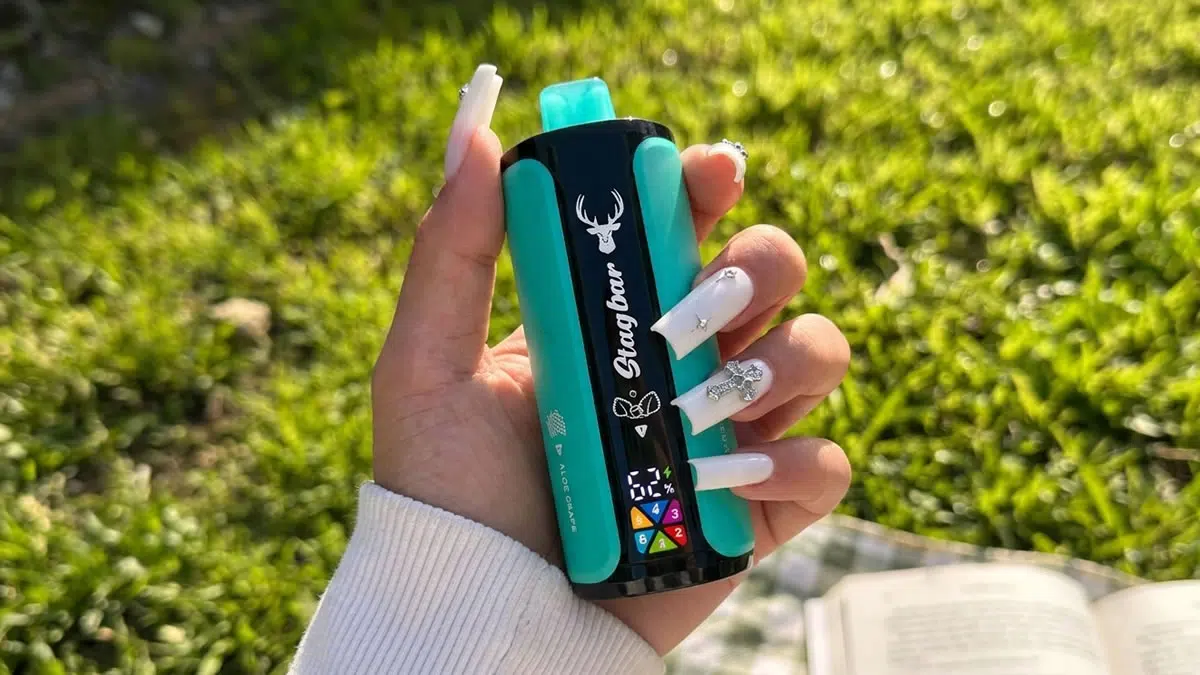
StagBar Vape 4in1 80K Puffs Disposable
The Stagbar 4-in-1 80,000 is a revolutionary high-capacity disposable featuring 4 flavors and 4 independent mesh coils in one device, delivering an industry-leading 80,000 puffs.
The 2026 Tobacco Monopoly Reform: E-Liquids and Nicotine Pouches
Austria is restructuring its nicotine and tobacco market through a legislative package passed by the Finance Committee. This reform will place alternative nicotine products under the national tobacco monopoly system, significantly changing how these products are taxed and distributed starting in 2026.
Nicotine Pouches
From July 2026, nicotine pouches and white snus will be reclassified as “high-dose addictive substances.” Their sale will be restricted exclusively to licensed tobacconists, known locally as Trafiken. They will be removed from supermarkets, gas stations, and general retail outlets, and domestic online sales will be prohibited.
E-Cigarette Liquids
Beginning in April 2026, a dedicated licensing system will govern the trade of all e-cigarette liquids. These liquids will also become subject to a national tobacco excise duty, which is expected to increase retail prices.
CBD and Cannabis Products
The reform also establishes a distribution framework for legal cannabis. From 2029, all CBD-containing products must be distributed exclusively through the tobacco monopoly. Specialist retailers will have a transition period until the end of 2028 to phase out their independent sales.
Regulatory Comparison of Nicotine and Cannabinoid Products
The table below details the current and upcoming regulatory status for different product categories in Austria:
| Product Type | Current Status (2026) | Upcoming Changes & Deadlines |
|---|---|---|
| Rechargeable Vapes & E-Liquids | Legal for 18+; subject to TPD limits (20mg/ml, 10ml bottles). | Excise tax and mandatory licensing for sales starting April 2026. |
| Disposable Vapes (Puffs) | Currently legal but targeted for phase-out. | Complete sales ban planned under environmental and health initiatives. |
| Heated Tobacco | Legal; subject to TPD regulations. | Characterizing flavor ban takes full effect after May 31, 2026. |
| Nicotine Pouches | Legal; widely available in general retail. | Restricted to licensed tobacconists (Trafiken) starting July 2026. |
| CBD Products | Legal if THC is under 0.3% and derived from approved EU hemp varieties. | Sales restricted exclusively to the tobacco monopoly starting in 2029. |
Travel Regulations: Flying into Austria with Vapes
Travelers entering Austria must adhere to international aviation safety guidelines and Austrian customs regulations regarding vaping equipment and e-liquids.
Aviation Security Rules
All electronic cigarettes, vaporizers, and spare lithium-ion batteries must be carried in hand luggage (carry-on). They are strictly prohibited in checked baggage due to the risk of fire from lithium batteries. Devices must be powered off during the flight, and charging them onboard is illegal.
Liquid Restrictions
E-liquids carried in hand luggage are subject to the standard 100ml limit per container. All liquid containers must fit into a single, transparent, resealable 1-liter plastic bag. Any e-liquids exceeding this limit must be packed in checked baggage.
Customs Allowances
Travelers arriving from non-EU countries can bring vaping equipment for personal use duty-free, provided the total value of their personal imports does not exceed €430 for air travelers (or €300 for land travelers). Vapes must be for personal use only.
At Austrian Airports
Vaping is prohibited inside the terminals of Austrian airports, including Vienna International Airport (VIE). Vapers must use designated smoking cabins located near the gate areas (Gates C, D, F, and G) or designated outdoor terraces.


StagBar Vape 6in1 180K Puffs Disposable
The Stagbar 6-in-1 featuring a unique 6-flavor system and six independent mesh coils, this device allows users to switch between six distinct tastes in one sleek unit, delivering an unprecedented 180,000 puffs.
Purchasing Vapes Locally: Online Sales Ban
Austria prohibits the cross-border remote and online sale of nicotine-containing vaping products to consumers. This means residents and visitors cannot order e-liquids or nicotine-containing vape devices from international websites for delivery to an Austrian address.
Vaping supplies must be purchased in person from physical retail locations. These are divided into two main categories:
- Specialist Vape Shops: These stores carry a wider selection of hardware, refillable pod systems, coils, and various e-liquid brands.
- Tobacconists (Trafik): These licensed kiosks are marked with a “Trafik” sign. They are located throughout Austria and sell traditional tobacco, basic e-liquids, and standard pod systems.
Frequently Asked Questions
-
Is it legal to buy vapes online in Austria?
No. Austria bans the cross-border online sale of nicotine-containing vaping products. Consumers must purchase their vaping devices and e-liquids in person from physical retail stores, such as specialist vape shops or licensed tobacconists (Trafiken).
-
Can I bring my personal vape on a flight to Vienna?
Yes, you can bring a personal vape to Vienna. The device and its lithium batteries must be kept in your carry-on luggage. E-liquids in your carry-on must be in containers of 100ml or less and fit inside a transparent 1-liter plastic bag.
-
What is the legal age for vaping in Austria?
The legal age to purchase and use vaping products, including both nicotine-containing and nicotine-free e-liquids, is 18. Retailers are legally required to verify the age of customers if there is any doubt regarding their majority.
-
Are nicotine-free vapes subject to the same regulations?
Yes. In Austria, nicotine-free e-liquids and vapes must be notified through the EU TPD portal and carry health warnings on their packaging, though the warning text differs from that used on nicotine-containing products.
-
Can I vape in restaurants or bars in Austria?
No. Vaping is prohibited inside all restaurants, bars, cafes, and pubs under the 2019 indoor smoking ban. You must use designated outdoor areas where smoking is permitted.
Disclaimer: The information provided in this article is for informational purposes only and does not constitute legal advice. Vaping regulations are subject to change. Please consult the Federal Ministry of the Republic of Austria or local customs authorities for the most up-to-date legal requirements.


