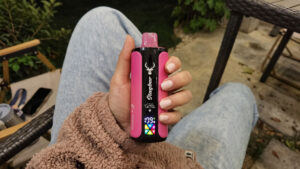
The Polish Ministry of Health has officially delayed its highly anticipated ban on selling e-cigarettes to minors, pushing the implementation date to the second quarter of 2025. This legislative setback occurs amid a rising youth vaping epidemic and growing criticism from health experts who argue the government’s measures are far too conservative.
While existing regulations theoretically prohibit the sale of nicotine-containing e-cigarettes to minors, the law is poorly enforced. Furthermore, a major loophole allows minors to legally purchase nicotine-free vapes, which are heavily marketed with appealing flavors and eye-catching displays near checkout counters.
To address this, the Ministry of Health drafted an amendment to the Tobacco Control Act. However, the legislative process has stalled, and a revised draft has introduced significant delays to accommodate market transition and international regulatory requirements.
Key Changes Under the Proposed Amendment
The new draft legislation aims to standardize rules for all vaping products, treating nicotine-free e-cigarettes with the same severity as traditional tobacco products.
| Regulatory Aspect | Current Polish Law | Proposed Amendment (Q2 2025) |
|---|---|---|
| Sales to Minors (<18) | Banned for nicotine vapes only | Banned for ALL vapes (including nicotine-free) |
| Advertising & Promotion | Restricted for nicotine products | Complete ban on all vape advertising |
| Health Warnings | Required for nicotine liquids | Required on all packaging (nicotine & nicotine-free) |
| Refill Bottle Volume | 10ml limit for nicotine liquids | 10ml limit extended to nicotine-free liquids |
The Ministry of Health firmly rejected lobbying efforts from the tobacco industry to allow nicotine-free liquids to be sold in larger containers (such as 60ml). Officials argued that allowing large bottles encourages users to manually mix their own nicotine bases, posing a severe, unregulated public health risk.
Why is the Law Delayed?
The delay to Q2 2025 is primarily driven by two factors. First, following public consultations, the government agreed to a six-month transition period. This allows businesses to clear out old stock that lacks mandatory health warning labels.
Second, the law must be submitted to the European Commission for a mandatory three-month notification procedure. Because the Polish Council of Ministers has not yet approved the final draft, this international review process cannot begin, making a January launch impossible.
Demands for a Total Disposable Vape Ban
Public health advocates and legal experts argue that the amendment does not go far enough. Katarzyna Fortak-Karasińska, a legal expert at F/K Legal, points out that Poland is being overly cautious compared to other European nations.
“The proposed changes are a step in the right direction, but they are too conservative,” Fortak-Karasińska stated. She highlighted Belgium as a prime example, where a total ban on disposable e-cigarettes was successfully cleared by the European Commission and will take effect on January 1, 2026.
The urgency for stronger action is supported by local data. A report by the Rotary Club Warszawa and the Institute for Social and Market Research revealed that 37% of Polish youth view disposable e-cigarettes as the most attractive nicotine product on the market. Furthermore, 69% of young respondents agreed that youth nicotine addiction is a major national crisis, signaling that current enforcement has failed.